
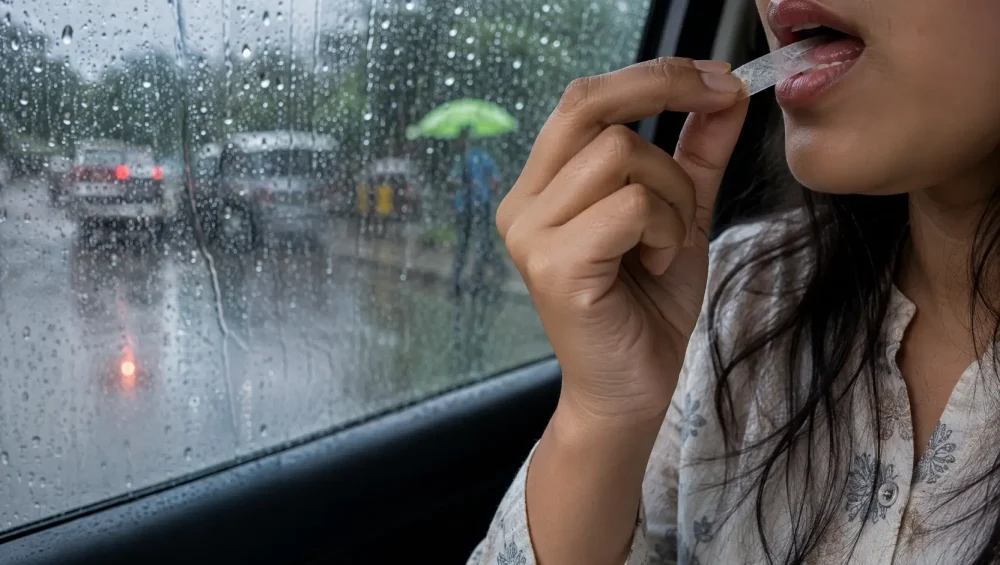
Why Your Breath Smells Worse in Monsoon: Humidity, Fungal Growth & Dampness Explained
If you’ve noticed your breath feels worse during the rainy months – even on days when you haven’t eaten anything unusual – you’re not imagining it. Monsoon weather changes the environment inside your mouth in ways that summer heat and winter dryness don’t, and the result is often breath that feels sticky, sour, or just “off” no matter how often you brush.
Here’s what’s actually happening, and why it’s a different problem from the bad breath you deal with in peak summer.
How Humidity Changes What’s Happening in Your Mouth
Your mouth relies on a steady flow of saliva to rinse away food particles and keep odour-causing bacteria in check. High humidity affects this balance in an indirect but noticeable way – the constant dampness in the air reduces how thirsty you feel, so most people drink less water during monsoon compared to summer. Less water intake means less saliva production, and less saliva means bacteria have more time to sit undisturbed on your tongue and between your teeth.
At the same time, monsoon days are often spent moving between air-conditioned indoor spaces and humid outdoor air. This back-and-forth dries out the mouth faster than a single stable climate would, which is part of why breath can feel noticeably worse by mid-afternoon during the rainy season.
Fungal and Bacterial Growth Increases in Damp Conditions
Moisture is one of the main things bacteria and fungi need to multiply, and monsoon delivers exactly that – both in the environment around you and inside your mouth if oral hygiene slips even slightly. The bacteria responsible for bad breath thrive in warm, moist, low-oxygen conditions, and the back of the tongue during monsoon is often exactly that: coated, slightly damp, and rarely cleaned as thoroughly as the teeth.
Damp weather can also make it easier for oral thrush and other fungal overgrowth to take hold, particularly if your immune system is already working overtime dealing with seasonal colds or infections – both of which are common during monsoon. This is one of the lesser-known reasons breath can smell different (often described as more sour or yeasty) during the rainy season compared to a typical summer or winter odour.
Monsoon Foods That Make It Worse
The season’s food habits don’t help either. Monsoon in India usually means more fried snacks – pakode, samosas, bhajiyas – alongside frequent cups of chai and coffee. Each of these contributes to bad breath on its own:
- Fried, oily food takes longer to digest and leaves a heavier residue on the tongue and teeth
- Chai and coffee reduce saliva production and coat the mouth with tannins that bacteria feed on
- Comfort eating during rainy days often means smaller sips of water throughout the day, worsening the dry-mouth effect already caused by humidity
We’ve covered how food-related odour builds up between brushing in more detail in our guide on oral hygiene between brush cycles, and the tea-and-coffee angle specifically in breath fresheners for coffee and tea lovers.
Monsoon Bad Breath vs Summer Bad Breath: What’s Different
| Factor | Monsoon | Summer |
| Main cause | Humidity, reduced water intake, damp environment | Heat, sweating, dehydration |
| Bacterial behaviour | Thrives in dampness and low airflow | Thrives in dry, dehydrated mouths |
| Common trigger foods | Fried snacks, chai, coffee | Spicy food, cold drinks, ice cream |
| Odour character | Often described as sour or musty | Often described as dry or stale |
| Fastest fix | Hydration + tongue cleaning + mint strip | Hydration + mint strip |
For the summer-specific breakdown, see our earlier guide on why bad breath gets worse in Indian summers – the underlying fix (staying hydrated, keeping the tongue clean, having a fast option on hand) is similar, but the cause is different enough that it’s worth understanding both.
What Actually Helps During Monsoon
- Drink water even when you don’t feel thirsty – humidity suppresses thirst signals, so set reminders if needed rather than relying on how thirsty you feel
- Clean your tongue, not just your teeth – this is where most of the bacteria responsible for monsoon breath actually sit
- Keep a mouth freshener strip on hand – for the gaps between meals and brushing when you can’t rinse or brush, a dissolving mint strip gives an instant reset without needing water
- Cut back slightly on fried snacks and excess chai – you don’t need to eliminate them, but balancing them with more water helps offset the residue they leave behind
- Watch out for a persistently sour or unusual smell – if it doesn’t improve with better hydration and hygiene, it’s worth getting it checked, since persistent fungal-type odour can sometimes need more than home care
Frequently Asked Questions
Why does my breath smell different during monsoon compared to other seasons?
Humidity reduces how much water you naturally drink, which lowers saliva production and lets odour-causing bacteria multiply more easily. Damp conditions also encourage fungal and bacterial growth in general, which can give monsoon breath a distinct sour or musty quality compared to summer or winter.
Can humidity alone cause bad breath?
Not directly, but it contributes heavily by suppressing thirst and encouraging bacterial growth in a moist environment. Combined with reduced water intake and monsoon eating habits, humidity becomes a significant indirect cause of worse breath during the rainy season.
Does drinking more water actually help with monsoon bad breath?
Yes. Since reduced water intake is one of the main drivers of monsoon breath, deliberately drinking water throughout the day – even without feeling thirsty – is one of the most effective things you can do to improve it.
What’s the fastest way to fix monsoon breath during the day?
A sip of water followed by a sugar-free mouth freshener strip works well when you don’t have access to a toothbrush. The water helps restore saliva flow, and the strip handles the immediate odour on your tongue and teeth.
Is monsoon breath a sign of a bigger oral health issue?
Occasional monsoon-related breath changes are normal and usually resolve with better hydration and tongue cleaning. If the odour is persistent, unusually strong, or accompanied by other symptoms, it’s worth checking with a dentist, since ongoing fungal or bacterial overgrowth can sometimes need more targeted treatment.
Final Thoughts
Monsoon breath isn’t just “regular” bad breath showing up at a different time of year – it’s driven by a specific combination of humidity, reduced water intake, and the season’s fried, tea-heavy eating habits. Once you know that, the fix is straightforward: drink more water than you think you need, don’t skip the tongue when you brush, and keep something fast on hand for the hours in between.
Keep a pack of Mountain Breeze strips in your bag through the rainy season – they dissolve instantly with no water needed, which makes them one of the easiest habits to build into a monsoon routine.


