

Man pulling out Mountain Breeze mouth freshener strips from bag during monsoon commute

Monsoon Survival Kit: Staying Fresh During Chai, Pakode & Rainy Commutes

Monsoon Survival Kit: Staying Fresh During Chai, Pakode & Rainy Commutes

Monsoon has its own rhythm – hot chai at every stop, pakode appearing at exactly the wrong moment before a meeting, and commutes that leave you rushing straight from a wet auto or bike into work without a spare minute to brush or rinse. Staying fresh during these months isn’t about changing your routine completely – it’s about having the right things within reach at the right moments.

Here’s a practical, situation-by-situation kit for getting through monsoon without your breath giving away every cup of chai and plate of pakode you’ve had that day.

The Chai-Pakode Problem

Monsoon and fried snacks go together almost automatically – the weather makes hot, oily food feel more appealing, and offices, homes, and street stalls lean into it. The issue is that this combination hits your breath from two directions at once: chai reduces saliva flow and leaves tannins behind, while fried, oily snacks coat the tongue and take longer to fully clear than lighter food would.

You don’t need to skip your evening chai and pakode to avoid this – you just need a quick reset afterward rather than letting the residue sit until your next proper brush. A dissolving mint strip right after finishing handles this in seconds, without needing to find water or step away to a washroom.

Wet Commute Breath Care: Bike, Auto & Metro

Monsoon commutes come with their own version of this problem. A rushed breakfast before a bike ride in the rain, a quick vada pav grabbed between an auto change, or a packed metro ride with no room to even check your phone, let alone brush your teeth – these are exactly the moments where a mouth freshener earns its place in your bag.

A few habits that help specifically during monsoon commutes:

  • Keep strips in your commute bag, not just your desk drawer – the moments you need them most are usually mid-commute, not at your desk
  • Use one right before you reach your destination, not right after eating – this way the freshness is at its peak exactly when you’re walking into the office or meeting someone
  • Carry a small bottle of water if your commute allows it – even a few sips before a strip improves how effectively it works, since a slightly hydrated mouth responds better than a completely dry one

This is the same logic we covered in our guide on best mouth fresheners for work, dates, and travel – the format that works is one you don’t have to think about or plan around.

Your Monsoon Travel Bag Essentials

If your monsoon plans stretch beyond the daily commute – a weekend trip to a hill station, a family outing, or travel where you’ll be in and out of humid, damp environments for hours – it helps to think of breath care as part of your travel bag, not an afterthought:

  • A pack of Mountain Breeze strips – pick Cool Mint if you want maximum freshness after heavier travel-day meals, or see our full flavour comparison guide to pick what suits you
  • A small reusable water bottle – humidity suppresses thirst, so you’re likely to drink less than you think you need unless you’re deliberate about it
  • A travel-size toothbrush if you’re away overnight – strips handle the gaps between brushing, they’re not a full replacement for it

College & Office Rainy Day Routine

Rainy days tend to compress your usual routine – you leave a little later because of the weather, skip the after-breakfast brush because you’re rushing, and end up relying on quick fixes through the day more than usual. A simple routine that works well for both college and office days during monsoon:

  1. Morning: a proper brush if you have time, or at minimum a strip right after breakfast if you’re rushing
  2. Mid-morning: a strip after your first chai break
  3. Post-lunch: a strip after lunch, especially if it included anything fried or spiced
  4. Evening: a strip after your evening chai-and-snack break, before heading into any evening plans or a longer commute home

Since Mountain Breeze strips are sugar-free, this kind of repeated, several-times-a-day use doesn’t carry the same tooth-decay concerns that sugary mints or candies would – you can read more on this in our guide on sugar-free mouth fresheners and dental health.

Quick Reference: What to Carry Where

WhereWhat to Keep ThereWhy
Office desk drawerA jar or larger packCovers multiple uses across the workday without running out
Commute bag / backpackA pocket-sized packAvailable exactly when you can’t access water or a washroom
Two-wheeler storage / car gloveboxA small blister packReady right after a ride, before walking into your destination
Travel bag (weekend trips)A combo flavour packFlexibility across different meals and situations over a multi-day trip

Frequently Asked Questions

How can I keep my breath fresh during monsoon without carrying water everywhere?

A dissolving mouth freshener strip is the most practical option since it needs no water and works in seconds – ideal for commutes, classrooms, or meetings where stepping out to rinse isn’t realistic.

Does eating pakode every day during monsoon really affect breath that much?

Fried, oily food takes longer to clear from the mouth and tends to leave more residue than lighter meals, which is why breath can feel more noticeably affected on days with frequent fried snacking. A quick strip after each snack break helps offset this without requiring any change to your eating habits.

What should I carry for breath freshness on a rainy commute?

A pocket-sized pack of mouth freshener strips is the easiest option – small enough to fit in any bag or pocket, and usable without water right before you reach your destination.

Is it okay to use mouth freshener strips multiple times a day during monsoon?

Yes, as long as they’re sugar-free. Since monsoon routines often involve more frequent tea and snack breaks, a sugar-free strip is well suited to repeated daily use without the concerns that come with sugary alternatives.

What’s the best flavour to carry during monsoon?

Spearmint works well for frequent, all-day use like the office chai routine, while Cool Mint is better suited after heavier fried snacks or a long, humid commute. Our flavour comparison guide covers this in more detail.

Final Thoughts

Monsoon doesn’t need to mean giving up chai, pakode, or your usual commute – it just means being a little more deliberate about the gaps in between. Keep strips wherever your day actually takes you (desk, bag, glovebox), drink a bit more water than you feel like you need, and you’ll get through the rainy season without ever having to think twice about your breath.

Stock up on Mountain Breeze strips for your commute bag, desk, and travel kit before the season gets any wetter.

Woman using Mountain Breeze mouth freshener strip during monsoon rain to fight humidity-related bad breath

Why Your Breath Smells Worse in Monsoon: Humidity, Fungal Growth & Dampness Explained

Why Your Breath Smells Worse in Monsoon: Humidity, Fungal Growth & Dampness Explained

If you’ve noticed your breath feels worse during the rainy months – even on days when you haven’t eaten anything unusual – you’re not imagining it. Monsoon weather changes the environment inside your mouth in ways that summer heat and winter dryness don’t, and the result is often breath that feels sticky, sour, or just “off” no matter how often you brush.

Here’s what’s actually happening, and why it’s a different problem from the bad breath you deal with in peak summer.

How Humidity Changes What’s Happening in Your Mouth

Your mouth relies on a steady flow of saliva to rinse away food particles and keep odour-causing bacteria in check. High humidity affects this balance in an indirect but noticeable way – the constant dampness in the air reduces how thirsty you feel, so most people drink less water during monsoon compared to summer. Less water intake means less saliva production, and less saliva means bacteria have more time to sit undisturbed on your tongue and between your teeth.

At the same time, monsoon days are often spent moving between air-conditioned indoor spaces and humid outdoor air. This back-and-forth dries out the mouth faster than a single stable climate would, which is part of why breath can feel noticeably worse by mid-afternoon during the rainy season.

Fungal and Bacterial Growth Increases in Damp Conditions

Moisture is one of the main things bacteria and fungi need to multiply, and monsoon delivers exactly that – both in the environment around you and inside your mouth if oral hygiene slips even slightly. The bacteria responsible for bad breath thrive in warm, moist, low-oxygen conditions, and the back of the tongue during monsoon is often exactly that: coated, slightly damp, and rarely cleaned as thoroughly as the teeth.

Damp weather can also make it easier for oral thrush and other fungal overgrowth to take hold, particularly if your immune system is already working overtime dealing with seasonal colds or infections – both of which are common during monsoon. This is one of the lesser-known reasons breath can smell different (often described as more sour or yeasty) during the rainy season compared to a typical summer or winter odour.

Monsoon Foods That Make It Worse

The season’s food habits don’t help either. Monsoon in India usually means more fried snacks – pakode, samosas, bhajiyas – alongside frequent cups of chai and coffee. Each of these contributes to bad breath on its own:

  • Fried, oily food takes longer to digest and leaves a heavier residue on the tongue and teeth
  • Chai and coffee reduce saliva production and coat the mouth with tannins that bacteria feed on
  • Comfort eating during rainy days often means smaller sips of water throughout the day, worsening the dry-mouth effect already caused by humidity

We’ve covered how food-related odour builds up between brushing in more detail in our guide on oral hygiene between brush cycles, and the tea-and-coffee angle specifically in breath fresheners for coffee and tea lovers.

Monsoon Bad Breath vs Summer Bad Breath: What’s Different

FactorMonsoonSummer
Main causeHumidity, reduced water intake, damp environmentHeat, sweating, dehydration
Bacterial behaviourThrives in dampness and low airflowThrives in dry, dehydrated mouths
Common trigger foodsFried snacks, chai, coffeeSpicy food, cold drinks, ice cream
Odour characterOften described as sour or mustyOften described as dry or stale
Fastest fixHydration + tongue cleaning + mint stripHydration + mint strip

For the summer-specific breakdown, see our earlier guide on why bad breath gets worse in Indian summers – the underlying fix (staying hydrated, keeping the tongue clean, having a fast option on hand) is similar, but the cause is different enough that it’s worth understanding both.

What Actually Helps During Monsoon

  • Drink water even when you don’t feel thirsty – humidity suppresses thirst signals, so set reminders if needed rather than relying on how thirsty you feel
  • Clean your tongue, not just your teeth – this is where most of the bacteria responsible for monsoon breath actually sit
  • Keep a mouth freshener strip on hand – for the gaps between meals and brushing when you can’t rinse or brush, a dissolving mint strip gives an instant reset without needing water
  • Cut back slightly on fried snacks and excess chai – you don’t need to eliminate them, but balancing them with more water helps offset the residue they leave behind
  • Watch out for a persistently sour or unusual smell – if it doesn’t improve with better hydration and hygiene, it’s worth getting it checked, since persistent fungal-type odour can sometimes need more than home care

Frequently Asked Questions

Why does my breath smell different during monsoon compared to other seasons?

Humidity reduces how much water you naturally drink, which lowers saliva production and lets odour-causing bacteria multiply more easily. Damp conditions also encourage fungal and bacterial growth in general, which can give monsoon breath a distinct sour or musty quality compared to summer or winter.

Can humidity alone cause bad breath?

Not directly, but it contributes heavily by suppressing thirst and encouraging bacterial growth in a moist environment. Combined with reduced water intake and monsoon eating habits, humidity becomes a significant indirect cause of worse breath during the rainy season.

Does drinking more water actually help with monsoon bad breath?

Yes. Since reduced water intake is one of the main drivers of monsoon breath, deliberately drinking water throughout the day – even without feeling thirsty – is one of the most effective things you can do to improve it.

What’s the fastest way to fix monsoon breath during the day?

A sip of water followed by a sugar-free mouth freshener strip works well when you don’t have access to a toothbrush. The water helps restore saliva flow, and the strip handles the immediate odour on your tongue and teeth.

Is monsoon breath a sign of a bigger oral health issue?

Occasional monsoon-related breath changes are normal and usually resolve with better hydration and tongue cleaning. If the odour is persistent, unusually strong, or accompanied by other symptoms, it’s worth checking with a dentist, since ongoing fungal or bacterial overgrowth can sometimes need more targeted treatment.

Final Thoughts

Monsoon breath isn’t just “regular” bad breath showing up at a different time of year – it’s driven by a specific combination of humidity, reduced water intake, and the season’s fried, tea-heavy eating habits. Once you know that, the fix is straightforward: drink more water than you think you need, don’t skip the tongue when you brush, and keep something fast on hand for the hours in between.

Keep a pack of Mountain Breeze strips in your bag through the rainy season – they dissolve instantly with no water needed, which makes them one of the easiest habits to build into a monsoon routine.

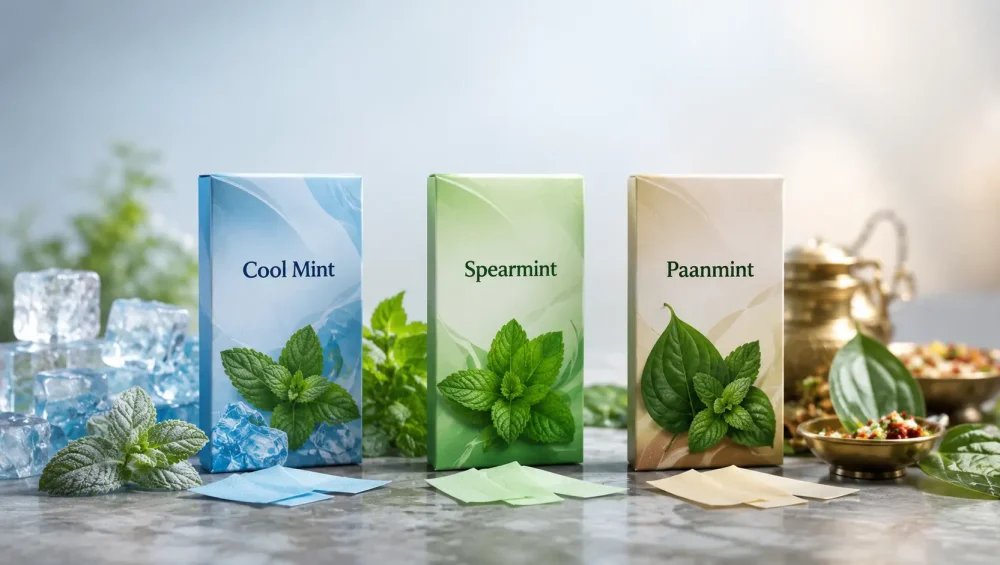
Cool Mint vs Spearmint vs Paanmint

Cool Mint vs Spearmint vs Paanmint: Which Mountain Breeze Flavour Should You Pick?

Three flavours, one decision, and most first-time buyers end up picking whichever one has the nicest-looking pack. That works fine – but if you actually want a flavour that fits your daily routine, your tolerance for intensity, and the situations you use a mouth freshener in most, there’s a clearer way to choose.

This guide breaks down Cool Mint, Spearmint, and Paanmint honestly – what each one actually feels like, who it suits best, and which one to start with if you’re buying Mountain Breeze for the first time.

The Quick Answer

FlavourIntensityBest ForIdeal Situation
Cool MintStrong, icy, sharpMaximum freshness impactAfter heavy meals, alcohol, smoking, or when you want a noticeable cooling burst
SpearmintGentle, mellow, smoothFrequent, all-day useOffice desk, multiple uses a day, sensitive palates
PaanmintModerate, culturally familiarTraditional taste with modern formatAfter meals, family gatherings, gifting, festive occasions

Cool Mint – For When You Want Maximum Intensity

Cool Mint is built around a strong menthol punch. The moment the strip dissolves, it delivers a sharp, icy sensation that’s hard to miss – this is the flavour people reach for when they want to feel like their mouth has been completely reset, not just lightly refreshed.

That intensity makes it particularly effective in situations where you’re working against a strong existing odour. If you’ve just had a spicy meal loaded with garlic and onion, finished a cigarette, or had a couple of drinks, Cool Mint’s strength is exactly what cuts through most effectively. We’ve covered why this matters in more detail in our guides on removing alcohol smell from your mouth and using a mouth freshener after smoking – both point to Cool Mint as the stronger option when the odour you’re dealing with is stronger than usual.

The trade-off is that some people find it a little too intense for repeated use through the day – five Cool Mint strips in a row can feel sharper than necessary if you’re just topping up freshness after a cup of tea. You can browse the full range on our Cool Mint strips page.

Spearmint – For Frequent, All-Day Use

Spearmint is the gentler sibling. It still delivers a clean, minty freshness, but without the sharp cooling intensity of Cool Mint. The flavour is smoother and slightly sweeter, which makes it far more comfortable to use multiple times across a single day without feeling like you’re overdoing it.

This is the flavour that works best for people who keep a pack on their desk and reach for it after every cup of chai, after lunch, and again mid-afternoon. It’s also a good starting point for anyone who finds strong mint flavours a bit overwhelming, or for first-time strip users who aren’t used to the sensation of a dissolving strip yet. Read more about why this profile suits daily, repeated use in our full breakdown of why Spearmint is a popular everyday choice.

Paanmint – For Traditional Taste in a Modern Format

Paanmint takes a different approach altogether. Instead of going purely mint-forward, it blends the familiar taste of paan with a clean mint finish – giving you something that feels culturally recognisable while still delivering the instant, sugar-free freshness of a dissolving strip.

This makes Paanmint a strong choice after meals, particularly in households and gatherings where paan or mukhwas is already part of the after-dinner routine. It’s also the flavour most people gravitate towards when buying for parents, grandparents, or guests who are used to a more traditional mouth freshener taste but might appreciate the convenience of a sugar-free strip over loose mukhwas. For more on how modern strips compare to that traditional format, see our detailed guide on mukhwas ingredients and how strips compare.

Paanmint is also consistently the top pick for festive and wedding gifting – we’ve covered why in our guide to mouth freshener gifting for Indian weddings and celebrations.

How to Choose Based on Your Situation

SituationRecommended FlavourWhy
Office desk, multiple uses a daySpearmintGentle enough for repeated use without feeling excessive
After alcohol or smokingCool MintStrongest cooling effect cuts through more stubborn odours
After a heavy, spicy mealCool Mint or PaanmintBoth handle strong food odours well; Paanmint if you want a familiar taste
Family gatherings, after dinner at homePaanmintCulturally familiar flavour that fits the traditional after-meal moment
Gifting for weddings or festivalsPaanmint or a mixed comboMost universally appreciated across age groups
First time trying breath stripsSpearmintMildest introduction to the dissolving-strip sensation
Gym, post-workoutCool MintStrong, energising sensation pairs well with post-exercise freshness

Can You Mix Flavours?

Yes, and this is genuinely the easiest way to figure out your preference without committing to a single flavour upfront. Mountain Breeze offers combo packs that pair Cool Mint with Spearmint, or Paanmint with Cool Mint, so you can carry two options and use whichever fits the moment – Spearmint through the day, Cool Mint after a heavy meal or a smoke break, for instance. This is also the safest choice if you’re buying for a household or an office where different people will have different preferences. You’ll find the full range of single-flavour and combo packs on the Mountain Breeze shop page.

Which Flavour Should First-Time Buyers Start With?

If you’ve never used a dissolving mouth freshener strip before, Spearmint is the easiest entry point – it lets you get used to the format itself (how quickly it dissolves, how the freshness spreads) without the sharper intensity of Cool Mint competing for your attention. Once you’re comfortable with strips as a format, trying Cool Mint and Paanmint becomes about matching the flavour to the situation rather than adjusting to something new. For a broader look at how strips compare to other mouth freshener formats before you buy, our guide on choosing the best mouth freshener in India is a useful starting point.

Frequently Asked Questions

Which Mountain Breeze flavour lasts the longest?

All three flavours dissolve within roughly the same 5–15 seconds and offer comparable freshness duration. Cool Mint often feels like it “lasts longer” simply because the initial sensation is more intense, not because the underlying formula works differently.

Is Paanmint the same as regular paan or mukhwas?

No. Paanmint is a sugar-free mint strip flavoured to evoke the taste of traditional paan, without any of the ingredients found in actual paan (including no tobacco or areca nut). It’s designed as a modern, convenient alternative to traditional after-meal fresheners.

Which flavour is best for kids or elderly family members?

Spearmint’s milder profile is generally the most comfortable choice for people who are sensitive to strong mint intensity, including elderly users. For guidance specific to children, see our guide on mouth freshener safety for kids.

Can I buy a sample pack with all three flavours?

Yes, Mountain Breeze offers combo and multi-flavour packs so you can try Cool Mint, Spearmint, and Paanmint together before deciding on a single-flavour pack. Check current combo options on the shop page.

Does flavour affect how well the strip works?

No – all three flavours use the same Orally Disintegrating Strip (ODS) technology and are equally effective at neutralising odour. The difference is purely in taste and intensity, not performance.

Final Thoughts

There’s no single “best” flavour among Cool Mint, Spearmint, and Paanmint – there’s only the one that fits how and when you actually use a mouth freshener. If you want maximum impact after something strong, Cool Mint. If you’re using it multiple times a day, Spearmint. If you want something that feels familiar and works well for gifting or family settings, Paanmint.

Not sure yet? Start with a combo pack, use each flavour for a week, and you’ll know exactly which one to reorder. Explore the full Mountain Breeze range here.

mouth freshener after smoking

Mouth Freshener After Smoking a Cigarette: Does It Actually Work?

You step out for a smoke break, come back in, and immediately wonder if anyone can tell. Popping a strip or a mint feels like the obvious fix – but does it actually get rid of cigarette smell, or is it just covering it up for a few minutes?

The honest answer is a bit of both, and understanding why changes how you use a mouth freshener after smoking. This guide breaks down what actually causes “smoker’s breath,” what a mouth freshener can and can’t do about it, and the routine that works best if you want to walk back into a meeting, a family gathering, or a date without that giveaway smell.

Why Cigarette Smell Lingers So Long After Smoking

Cigarette smoke leaves behind more than just a smell sitting on your tongue. Tar and nicotine coat the teeth, tongue, and the soft tissue inside your mouth, and these residues don’t rinse away easily with water alone. On top of that, smoke is drawn deep into your lungs and throat, which means part of the odor is released again every time you exhale – not unlike how alcohol breath keeps returning because it’s released through the lungs, cigarette smell works the same way.

Smoking also dries out your mouth. Nicotine reduces saliva production, and saliva is what normally washes away bacteria and odor-causing particles throughout the day. With less saliva in circulation, the bacteria that break down leftover smoke residue multiply faster, which is part of why the smell seems to hang around long after the cigarette is finished.

What Actually Causes “Smoker’s Breath”

Smoker’s breath isn’t caused by one single thing – it’s a combination of four factors working together:

  • Tar and residue on the tongue and teeth – smoke particles settle on oral surfaces and continue releasing odor for hours
  • Sulfur compounds – smoking encourages the same odor-producing bacteria responsible for regular bad breath, and it accelerates their activity
  • Dry mouth – reduced saliva means less natural cleansing, so odor builds up faster than usual
  • Lung and throat residue – a portion of the smell is exhaled gradually over time, which is why the smell can return even after brushing

This is very similar to the mechanism behind lingering food or drink odors, which we’ve covered in detail in our guide on how bacteria rebuild in the mouth between brushing cycles.

Does a Mouth Freshener Actually Remove Cigarette Smell?

Here’s the direct answer: a mouth freshener neutralizes and masks the surface-level smell very effectively, but it cannot fully eliminate the portion of odor coming from your lungs. That part fades naturally over the next 30 to 60 minutes as your body clears the smoke residue from your respiratory system.

What this means practically is that a good mouth freshener strip handles the part of the problem people actually notice in conversation – the smell on your breath as you speak, which comes primarily from your tongue, teeth, and the moisture in your mouth. A dissolving mouth freshener strip spreads mint oils evenly across your tongue and inner mouth within seconds, which directly targets where most of the noticeable smell is coming from.

So the strip isn’t lying to you when it makes your breath smell fresh – it’s just not a substitute for time and hydration when it comes to the deeper, lung-based portion of the odor.

What Works Best After a Cigarette (And What Doesn’t)

MethodSpeedEffectivenessPractical?
Mouth freshener stripsInstant (5–10 sec)High – covers tongue, teeth, and surface odorYes
Drinking waterGradualMedium – rehydrates and restores saliva flowYes
Chewing gumGradualLow-Medium – masks only, fades within minutesYes
Brushing teeth and tongue3–5 minutesHigh – if tongue is includedDepends on access
Perfume or deodorant near the mouthInstantNone – mixes with smell, doesn’t remove itAvoid
CoffeeInstantNone – adds a second strong smell on topAvoid

The pattern here is the same one we found when we looked at removing alcohol smell from breath – the fastest, most reliable fixes are the simplest ones: water, a strip, and (when possible) a proper brush.

A Simple Routine for After Every Cigarette

  1. Drink a few sips of water right after finishing – this starts restoring saliva flow immediately
  2. Use a Mountain Breeze mouth freshener strip on your tongue, letting it dissolve fully rather than chewing it
  3. If you’re heading straight into a conversation, use a second strip about 10–15 minutes later – this covers you through the window where lung-exhaled odor is still fading
  4. When you do have access to a toothbrush, focus on the tongue, not just the teeth – this is where most of the lingering residue actually sits

Before Meetings, Family, or Social Situations

If you’ve had a cigarette right before walking into a meeting, a family dinner, or a date, a single strip used at the door isn’t always enough on its own. A more reliable approach:

  • Use a strip immediately, then a second one 10 minutes later if you have the time gap – this compensates for the fact that some odor is still being exhaled
  • Avoid smoking right before eating something with garlic, onion, or strong spices – the two odors combine and become harder to manage with a single freshener
  • Keep a pack in your pocket or bag rather than relying on remembering to carry one – see our guide on best mouth fresheners for work, dates, and travel for how to build this into a daily habit

How Often Can You Use a Mouth Freshener If You Smoke Regularly?

If you smoke multiple times a day, using a sugar-free strip after each cigarette is generally fine for daily use – the concern with frequency usually comes from sugar-based mints or gum, not sugar-free dissolving strips. Mountain Breeze strips are sugar-free and vegetarian, which is exactly why they’re suited to this kind of repeated, throughout-the-day use rather than an occasional touch-up. You can read more about why the sugar-free format matters for frequent daily use in our guide on sugar-free mouth fresheners and teeth health.

That said, a mouth freshener only manages the breath side of smoking – it doesn’t reduce any of the other effects of smoking on your body. If cigarette smell is something you’re managing multiple times a day, it’s worth keeping in mind that quitting is the only way to remove the smell (and the underlying cause) completely. A freshener is a practical short-term fix, not a long-term solution.

Frequently Asked Questions

Does mint really get rid of cigarette smell, or just cover it up?

It does both, depending on where the odor is coming from. Mint from a dissolving strip actively neutralizes odor-causing compounds on the tongue and inner mouth, which is where most of the noticeable smell during conversation comes from. It cannot stop the smaller portion of odor released gradually through your lungs – that fades naturally over time.

How long does cigarette breath last after smoking?

Surface-level mouth odor can be significantly reduced within seconds using a mouth freshener strip. The lung-exhaled component of the smell typically fades over 30 to 60 minutes as your body clears the smoke residue.

Is it safe to use mouth freshener strips after every cigarette?

Yes, as long as the strip is sugar-free. Mountain Breeze strips are sugar-free and vegetarian, making them safe for repeated use throughout the day without the tooth-decay concerns that come with sugary mints or candies.

What’s the fastest way to get rid of cigarette smell before a meeting?

Drink a little water, then use a mouth freshener strip on your tongue and let it dissolve completely. If you have 10–15 minutes before the meeting, use a second strip closer to when you actually walk in – this covers the tail end of the lung-exhaled smell.

Does chewing gum work better than a mouth freshener strip for cigarette smell?

Gum can help through the extra saliva production from chewing, but it only masks odor rather than actively neutralizing it, and the effect fades once you stop chewing. For a full breakdown, see our comparison on mouth freshener strips vs chewing gum.

Final Thoughts

A mouth freshener isn’t a magic eraser for cigarette smell, but used correctly, it handles the part of the problem that actually matters in day-to-day conversations – the smell on your breath as you speak. Pair a Mountain Breeze strip with a little water and, when you can, a proper brush of the tongue, and you’ll walk back into any room without that giveaway smell following you in.

Keep a pack in your pocket or bag so it’s there exactly when you need it – no water, no chewing, just a strip and a few seconds. If you also deal with this after drinks, our guide on removing beer and alcohol smell from your mouth covers the same routine for those situations.