
Instant Mouth Freshener: Science, Timing, and Real Life Use Cases

Use a mouth freshener after lunch, before a meeting or on the way to meet someone, and one question naturally comes up: how long does a mouth freshener last?

The most useful answer is that there is no single fixed duration. Freshness can feel different from one person to another and from one product format to another. What you ate, how dry your mouth is, the type of freshener you use and even what caused the unwanted breath in the first place can all change how long the fresh feeling remains noticeable.

That is why a product that feels effective after a cup of tea may seem to fade much sooner after garlic-heavy food, smoking or a couple of drinks.

Instead of chasing an unrealistic “lasts for X hours” promise, it makes more sense to understand what actually affects freshness and choose the right format for the situation.

So, How Long Does a Mouth Freshener Actually Last?

Mouth fresheners are designed mainly for temporary freshness. Some work almost immediately and are ideal for quick social situations, while others release flavour gradually or keep working while you continue chewing them.

There is no reliable universal number that applies to every strip, mint, gum, spray or mukhwas. Even two people using the same product can experience the duration differently because their saliva levels, food choices and oral condition are not identical.

The format also matters. A dissolving strip gives a quick burst without requiring chewing. Gum continues releasing flavour while it is being chewed. Hard mints dissolve slowly. Mukhwas depends heavily on its ingredients, and sprays are designed more around immediate application.

If you are still deciding which format suits you, our guide to the best mouth freshener options in India compares the common choices in more detail.

What Actually Affects Freshness Duration?

1. What Caused the Unwanted Breath?

This is probably the most overlooked factor.

Freshening your mouth after a normal meal is different from dealing with strong garlic, onion, alcohol or smoking-related odour. Some smells are mainly sitting in the mouth, while others can continue returning even after you have cleaned or refreshed your mouth.

For example, after drinking alcohol, a minty flavour may temporarily make your mouth feel fresher, but it cannot instantly remove alcohol that is still being processed by your body. That is why the fresh feeling may seem to disappear sooner in that situation.

We have covered this separately in our guide on choosing a mouth freshener after drinks.

2. How Dry Your Mouth Is

Saliva quietly does a lot of work throughout the day. It helps wash away food particles and keeps the mouth from becoming excessively dry.

When your mouth becomes dry after a long meeting, commute, workout, flight or several cups of coffee, stale breath can become more noticeable. In such situations, adding a strong mint flavour without addressing the dryness may give only temporary relief.

Drinking water regularly can therefore make a bigger difference than simply using freshener after freshener.

3. The Type of Mouth Freshener You Use

Different formats are built for different jobs.

Mouth Freshener TypeHow It FeelsBest Suited For
Dissolving breath stripsFast, concentrated freshness without chewingMeetings, travel, after meals and discreet use
Sugar-free chewing gumFlavour continues while you chew and chewing stimulates salivaLong drives or situations where chewing is convenient
Hard mintsGradual flavour release while the mint dissolvesCasual, occasional freshness
Mouth sprayImmediate flavour burstQuick use when carrying a small bottle is practical
MukhwasIngredient-dependent after-meal flavourHome, restaurants and traditional after-meal use

This is also why asking whether gum or strips “last longer” does not tell the whole story. Gum has the advantage of continuous chewing, while a strip is designed around speed, discretion and convenience. Our detailed mouth freshener strips vs chewing gum comparison explains the difference.

4. What You Eat or Drink Afterwards

You may use a freshener and feel perfectly fine, then drink coffee ten minutes later and wonder why the effect disappeared.

That is normal.

Strong tea, coffee, alcohol, spicy food, onions, garlic and smoking can introduce a fresh layer of flavour or odour into the mouth. In practical terms, the “duration” of a mouth freshener is not just about the product. It also depends on what happens after you use it.

5. Flavour Strength

A stronger flavour can create the impression that a mouth freshener lasts longer.

For example, an intense cooling mint may remain noticeable in your senses longer than a milder flavour. That does not automatically mean one formulation is controlling breath for several additional hours. Sometimes it simply means the initial mint sensation is stronger.

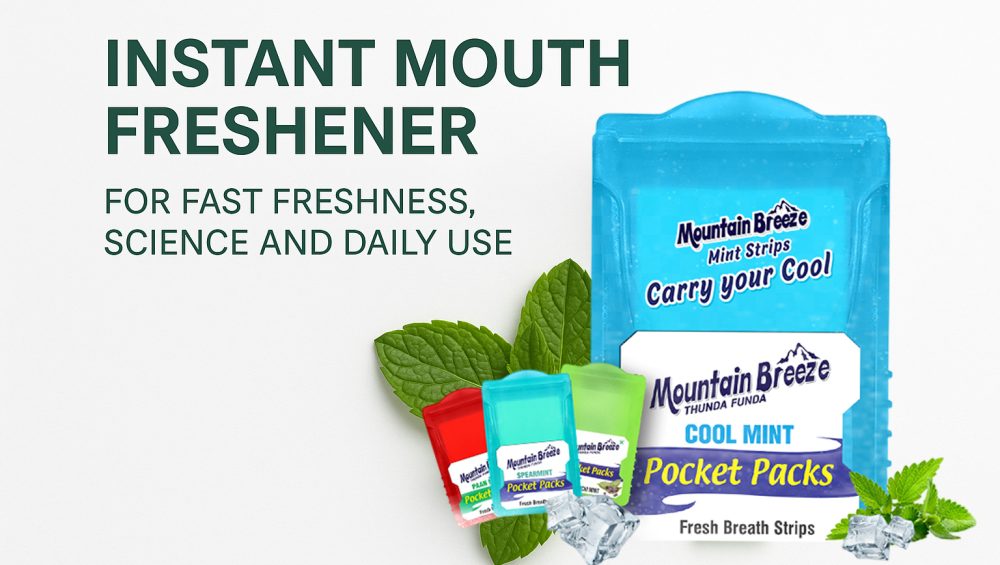
Mountain Breeze currently offers different flavour profiles, including Cool Mint, Spearmint and Paanmint. If you are unsure which intensity suits you, see our Cool Mint vs Spearmint vs Paanmint comparison.

6. Your Normal Oral Hygiene

A mouth freshener works best as a convenience product, not as a replacement for oral care.

If food particles remain between your teeth, the tongue is heavily coated or there is an underlying dental issue, fresh mint flavour can only do so much. The sensation may disappear while the original source of the odour remains.

Regular brushing, cleaning between the teeth, tongue cleaning and adequate hydration create a much better base for fresh breath than repeatedly masking an underlying problem.

Does a Stronger Mouth Freshener Mean Longer-Lasting Freshness?

Not necessarily.

There is an easy trap here: stronger mint equals stronger cooling, so it feels as though the product must also be working longer.

But intensity and duration are two different things.

A powerful cooling sensation can be useful when you want an immediate refresh after a heavy meal. A gentler flavour may be more comfortable when you use a freshener several times during the working day.

The better question is not “Which one is strongest?” It is “Which one fits the situations where I actually need it?”

How Can You Make the Fresh Feeling Last Longer?

You cannot make every mouth freshener last indefinitely, but a few simple habits can prevent the effect from disappearing unnecessarily fast.

  • Drink water regularly: A dry mouth often feels stale more quickly.
  • Rinse after strong food: Even plain water can help remove loose food particles before you use a freshener.
  • Keep your tongue clean: A coated tongue can hold food debris and odour-producing bacteria.
  • Choose sugar-free options for frequent use: If you reach for a freshener several times a day, avoiding repeated sugar exposure makes practical sense. Read our guide to sugar-free mouth fresheners for more detail.
  • Use the product at the right time: Using a freshener after finishing your coffee or meal usually makes more sense than taking one immediately before it.
  • Do not expect one product to cover the entire day: Fresh breath changes throughout the day because you keep eating, drinking, speaking and breathing.

Where Do Mouth Freshener Strips Fit In?

Dissolving mouth freshener strips are useful when the priority is speed and convenience rather than continuous chewing.

A thin strip can be placed on the tongue, allowed to dissolve and used without carrying a bottle, finding a bin or chewing during a conversation. That makes the format particularly practical after lunch, before a meeting, while travelling or before a social interaction.

Mountain Breeze mouth freshener strips are sugar-free, vegetarian and available in multiple flavours and pack sizes. You can explore Mountain Breeze mouth freshener strips here if you want to compare the available options.

The important point is to use them for what they are designed to do: provide convenient, on-demand freshness between your normal oral-care routines.

When a Mouth Freshener Is Not the Answer

If bad breath keeps returning despite brushing, tongue cleaning, hydration and normal oral care, simply switching to a stronger mint is unlikely to solve the underlying issue.

Persistent bad breath can sometimes be related to dental problems, gum issues, dry mouth or other causes that need professional attention.

A mouth freshener can help you feel fresher temporarily, but it should never be treated as a substitute for finding the cause of persistent bad breath.

Final Takeaway

So, how long does a mouth freshener last? There is no honest one-size-fits-all answer.

Freshness duration depends on the product format, flavour intensity, saliva, hydration, what you have eaten or drunk and the actual source of the unwanted breath. A long lasting mouth freshener is therefore not simply the product with the strongest mint flavour or the biggest duration claim on the pack.

The better choice is one that fits your routine.

If you need something while driving for hours, sugar-free gum may be convenient. If you need an immediate, discreet refresh before a meeting or after a meal, dissolving strips can make more sense. Traditional mukhwas still works well as an after-meal ritual when portability is not important.

Fresh breath is less about finding one product that supposedly lasts all day and more about having the right option available when you actually need it.

Frequently Asked Questions

How long do mouth freshener strips last?

There is no fixed duration that applies to every person or every strip. How long the fresh feeling remains noticeable depends on the formulation, flavour intensity, saliva levels and what you eat or drink afterwards. Breath strips are mainly designed for fast, convenient freshness rather than continuous flavour release.

Which type of mouth freshener lasts the longest?

It depends on what you mean by “lasts”. Chewing gum can keep releasing flavour while you continue chewing it, whereas strips and sprays are designed to work quickly. Hard mints dissolve gradually. The best format depends on whether you value continuous flavour, speed or discretion.

Why does my mouth freshener stop feeling fresh so quickly?

Dry mouth, coffee, alcohol, smoking, strong foods or an existing source of bad breath can all make the effect seem shorter. Drinking water and maintaining good oral hygiene can help create a better base for lasting freshness.

Can I use another mouth freshener when the freshness fades?

Follow the usage instructions provided with the particular product you are using. If you find yourself needing a freshener constantly because bad breath returns very quickly, it is worth looking at hydration, oral hygiene and possible underlying dental causes rather than relying only on repeated freshening.

Can a mouth freshener replace brushing?

No. Mouth fresheners are useful for temporary freshness between normal oral-care routines, but they do not replace brushing, cleaning between the teeth, tongue cleaning or professional dental care when needed.

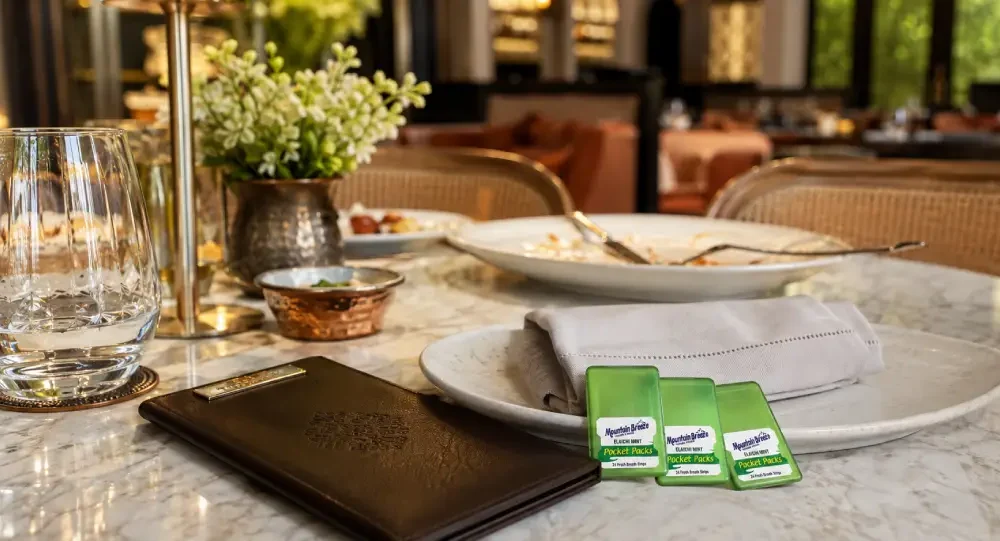
Mouth freshener strips served after a meal at a premium Indian restaurant

Mouth Freshener for Restaurants, Cafés & Hotels: A Bulk Buying Guide for India

The meal was excellent. The bill has arrived. Your guest stands up to leave and reaches instinctively towards the restaurant counter for something fresh after food.

That tiny moment is easy to overlook, but in Indian hospitality, the mouth freshener has been part of the post-meal experience for generations.

What has changed is the choice.

Restaurants are no longer limited to a bowl of saunf or colourful mukhwas near the cash counter. Hotels, cafés, caterers and premium dining businesses can now choose between loose mukhwas, wrapped mints, chewing gum, mouth freshener strips and other portion-controlled formats.

If you are sourcing a mouth freshener for restaurants or planning a recurring bulk order, the cheapest pack is not automatically the best option. Cost per guest, hygiene, wastage, storage, flavour, presentation and ease of service all matter.

This guide explains how to compare them properly.

Why Do Restaurants Serve Mouth Fresheners After Meals?

Indian food can leave plenty behind: onion, garlic, spices, coffee, tea and rich gravies all have flavours that can remain noticeable after the plate has been cleared.

A small after-meal freshener gives guests a convenient way to refresh their mouth before they leave the restaurant, travel home or continue with the rest of their evening.

There is also a hospitality element to it.

The final five minutes of a dining experience often include the bill, water, mouth freshener and goodbye. These may seem like small details compared with the food, but together they influence how polished the entire experience feels.

For a casual restaurant, a simple traditional mukhwas may fit perfectly. A premium hotel or corporate café may prefer a cleaner, portion-controlled format. The right answer depends on the establishment.

What Types of Mouth Fresheners Can Restaurants Buy in Bulk?

FormatMain AdvantagePossible LimitationBest Fit
Loose mukhwasTraditional and familiarOpen serving, variable portions and possible spillageTraditional restaurants and casual dining
Wrapped mintsEasy individual servingCreates wrappers and may contain sugarCafés, counters and reception areas
Chewing gumFamiliar and portableRequires chewing and later disposalLess formal environments
Breath sprayQuick applicationShared bottles are generally unsuitable for guest serviceMostly personal rather than table service
Dissolving mouth freshener stripsCompact, portion-controlled and no chewing requiredLess traditional than mukhwasRestaurants, cafés, hotels, banquets and corporate hospitality

If you want a broader comparison of these formats before choosing one for your property, see our guide to the best mouth freshener options in India.

1. Start With Cost Per Serve, Not Just Pack Price

This is one of the most useful calculations for any restaurant buyer.

Imagine Supplier A offers a cheaper jar but guests take large handfuls. Supplier B costs slightly more but gives you defined portions.

The first jar may actually cost more to operate.

For bulk purchasing, calculate:

Cost per serve = Total purchase cost ÷ Number of usable guest servings

Then include expected wastage.

Loose products can be difficult to portion consistently. One guest takes a pinch, another takes a spoonful, and a third decides the counter bowl is apparently tonight’s complimentary dessert.

Portion-controlled formats make consumption easier to estimate.

2. Estimate How Many Servings You Actually Need

Do not simply order the biggest carton available.

Start with your covers.

For example, a restaurant serving 100 guests per day does not necessarily need 100 mouth freshener portions every day because not every diner will take one.

A practical starting formula is:

Monthly requirement = Average daily covers × Days open × Expected usage rate

If 100 people dine each day, the restaurant operates 30 days and roughly 60% of guests take a freshener, the estimated requirement is around 1,800 servings for the month.

Then add a reasonable operational buffer for busy weekends, events and unexpected demand.

Once you have actual usage data from one or two months, ordering becomes much easier.

3. Consider Hygiene and Guest Handling

A communal bowl of mukhwas is culturally familiar, but it involves more open handling than individually portioned or enclosed formats.

This is especially relevant for:

  • premium restaurants,
  • hotel restaurants,
  • corporate dining facilities,
  • banquet service,
  • events with large guest volumes, and
  • properties trying to minimise open food handling.

A portion-controlled mouth freshener can also be handed over with the bill rather than displayed in an open bowl at the exit.

That gives the service team better control over presentation and consumption.

4. Check the Ingredients Before Ordering Thousands of Units

The phrase “mouth freshener” covers a surprisingly wide range of products.

Traditional mukhwas can contain fennel, seeds, sweetened coatings, spices and other ingredients. Some paan-style products may also contain ingredients a particular business does not want to serve.

If you are comparing traditional options, our guide on what is actually inside mukhwas is a useful place to start.

For packaged products, ask the supplier for the complete ingredient information rather than buying solely on flavour or appearance.

5. Decide Whether Sugar-Free Matters for Your Guests

Many traditional after-meal fresheners and candies are sweetened.

For an occasional restaurant visit, some diners may not care. Others actively look for sugar-free options because they prefer not to add another sugary product after dessert, tea or coffee.

Offering a sugar-free option can therefore make sense for properties serving health-conscious customers or using the freshener repeatedly across business lounges, restaurants and hospitality areas.

You can read more about the distinction in our guide to sugar-free mouth fresheners.

6. Choose Flavours That Match Your Customer Base

The strongest mint is not always the safest bulk-buying decision.

Your restaurant may serve children, families, international tourists, elderly guests and diners who simply dislike intense mint.

That is why flavour selection matters.

A balanced approach may include:

  • Cool Mint for guests who like a stronger cooling sensation,
  • Spearmint for a smoother, more familiar mint profile, and
  • Paanmint for diners who prefer a culturally familiar paan-inspired after-meal flavour.

For a closer comparison, see our Cool Mint vs Spearmint vs Paanmint guide.

A mixed-flavour bulk order can also make sense when the freshener is offered directly to guests rather than automatically placed with every bill.

7. Look at Storage Before You Look at Quantity Discounts

Restaurants naturally want better pricing on larger orders.

But buying six months of stock because the unit cost looks attractive is not clever if half of it sits in a hot storeroom or reaches the end of its usable shelf life.

Before placing a large order, check:

  • manufacturing or packing date,
  • expiry or best-before information as applicable,
  • recommended storage conditions,
  • how much dry storage space you have,
  • average monthly consumption, and
  • how frequently the supplier can replenish stock.

For many establishments, smaller recurring bulk orders are operationally smarter than one enormous annual purchase.

8. Check the Supplier and Pack Information

Bulk hospitality buying is different from grabbing a mint pack for yourself at a supermarket.

You are serving the product to customers, so procurement should check the basics.

For packaged food products in India, look for required label information such as the FSSAI licence details, batch or lot identification and relevant date marking.

FSSAI also provides a public facility through FoSCoS for checking the authenticity and status of food-business licences or registrations.

For larger recurring orders, your procurement checklist can include:

  • supplier/business details,
  • FSSAI information,
  • complete ingredient declaration,
  • batch traceability,
  • date marking and storage information,
  • invoice/GST requirements,
  • minimum order quantity,
  • dispatch timelines, and
  • replacement policy for damaged stock.

What Works Best for Different Hospitality Businesses?

Restaurants

The priority is usually after-meal service, fast replenishment and predictable cost per guest.

Traditional restaurants may still prefer mukhwas. Modern casual and premium restaurants may find portion-controlled strips easier to hand out with the bill.

Cafés

Cafés have a slightly different use case.

Coffee, sandwiches, desserts and long conversations mean customers may appreciate a quick freshener when leaving, but cafés generally do not need a traditional after-meal ritual at every table.

A small counter display or freshener offered with the bill can work better.

Hotels

Hotels may need mouth fresheners across several touchpoints:

  • restaurants,
  • banquet halls,
  • business lounges,
  • conference areas,
  • in-room welcome amenities, or
  • special events.

That makes consistent packaging and inventory planning particularly important.

Caterers and Banquets

For catering, the requirement is often concentrated into a few hours.

A wedding dinner serving 800 guests creates a very different inventory problem from a 60-seat restaurant operating every day.

Easy transport, quick distribution and predictable portions matter more when hundreds of guests may reach the freshener counter within a short period.

How Do Mountain Breeze Strips Fit Into Restaurant and Hotel Service?

Mountain Breeze fresh breath strips are thin dissolving mouth fresheners that are placed on the tongue rather than chewed.

They are sugar-free and available in several flavours and pack configurations.

For hospitality businesses, the practical advantage is the format: strips take up little storage space, do not require chewing and can be offered in controlled quantities rather than through an open communal bowl.

Mountain Breeze currently lists larger configurations including 140, 216, 280 and 432 strips depending on the product and flavour.

You can view the current Mountain Breeze mouth freshener range here.

Website pack prices are retail listings and should not automatically be treated as commercial quotations for a hotel, restaurant or recurring bulk requirement.

If you are purchasing for a restaurant chain, café, hotel, caterer, corporate facility or event business, use the Mountain Breeze Trade Enquiry page to discuss current availability, quantities and commercial requirements directly with the team.

Questions to Ask Before Placing a Bulk Mouth Freshener Order

Before confirming a supplier, get clear answers to these questions:

  1. How many actual guest servings are included?
  2. What is my final cost per serving?
  3. Is there a minimum quantity for trade pricing?
  4. Can I order mixed flavours?
  5. What are the manufacturing and date-marking details?
  6. How should the stock be stored?
  7. How quickly can repeat orders be dispatched?
  8. Can supply scale during weddings, festivals or peak season?
  9. What happens if cartons arrive damaged?
  10. Can the supplier support multiple restaurant or hotel locations?

Those questions tell you far more than simply asking, “What is your wholesale price?”

Final Thoughts

Choosing a mouth freshener for restaurants, cafés or hotels is a small procurement decision with surprisingly many moving parts.

The best option is not necessarily the cheapest mouth freshener per kilogram or the fanciest product on the table.

Look at the complete operating picture:

cost per serve, guest experience, portion control, ingredients, storage, wastage, service style and supplier reliability.

Traditional mukhwas can still be exactly right for many Indian dining concepts. Individually portioned or controlled formats can make more sense where convenience, presentation and predictable consumption matter more.

And before committing to a large quantity, run a smaller trial in the actual environment where the product will be served.

A procurement spreadsheet may tell you the cost. Your guests and service staff will tell you whether the format actually works.

For recurring or larger requirements, contact Mountain Breeze through the Trade Enquiry page to discuss your requirement.

Frequently Asked Questions

Which mouth freshener is best for restaurants?

There is no single best format for every restaurant. Traditional mukhwas suits many Indian dining concepts, while portion-controlled mints or dissolving strips may suit restaurants that prioritise compact storage, controlled serving and cleaner presentation. Compare the format against your customer profile and service style.

Can restaurants buy mouth freshener in bulk?

Yes. Many mouth freshener products are available in larger packs or through trade supply. For recurring restaurant or hotel requirements, ask the supplier directly about minimum quantities, current bulk pricing, flavour options, dispatch schedules and commercial terms instead of assuming normal retail prices apply.

How much mouth freshener should a restaurant order?

Start with average daily covers, operating days and the percentage of customers likely to take a freshener. Track actual consumption for the first month and use that data to plan future orders, adding a buffer for weekends, events and seasonal peaks.

How do I calculate mouth freshener cost per guest?

Divide your total purchase cost by the number of usable guest servings. Include expected wastage when comparing loose mukhwas with portion-controlled products. The lowest pack price does not always produce the lowest cost per guest.

Should hotels offer sugar-free mouth fresheners?

Offering a sugar-free option can be useful for guests who prefer one, particularly in business lounges, restaurants and other hospitality settings. It does not need to be the only option unless that fits the property’s positioning.

Are mouth freshener strips suitable for cafés?

They can be. Cafés may offer strips at the counter or with the bill for customers who want a quick refresh after coffee or food. Their compact format also makes storage relatively simple.

What should I check when buying mouth freshener wholesale in India?

Check the supplier, ingredient information, applicable FSSAI details, batch or lot identification, date marking, storage instructions, quantity per pack, cost per serving, invoicing requirements and replenishment lead time before placing a significant order.

Does Mountain Breeze accept trade enquiries?

Yes. Mountain Breeze has a dedicated Trade Enquiry page for businesses that want to discuss larger or recurring requirements rather than purchasing only through normal retail listings.

Sources

Indian professional skipping a meal with water and mouth freshener nearby during fasting

Why Does Bad Breath Get Worse When You Skip Meals? Fasting, Dry Mouth & Ketosis Explained

You skip breakfast because you are running late. Lunch gets pushed back because of meetings. By late afternoon, your stomach may be empty, but somehow your breath feels worse than it did after eating.

It seems strange. If you have not eaten anything, what is there to make your breath smell?

Quite a lot, actually.

Bad breath when skipping meals can happen because eating affects saliva flow, hydration and the environment inside your mouth. During longer fasting periods, metabolic changes may also affect the way your breath smells.

But there is an important distinction: skipping one meal does not automatically mean your body has entered ketosis. Ordinary dry-mouth-related bad breath can appear much sooner.

Here is what is actually happening.

Why Can Your Breath Smell Worse on an Empty Stomach?

Most everyday bad breath starts in the mouth rather than the stomach.

Your mouth contains bacteria that naturally live on the tongue, gums and other oral surfaces. As they break down proteins and debris, some produce volatile sulphur compounds that contribute to unpleasant breath.

Saliva normally helps control this environment. It keeps the mouth moist, washes away loose particles and supports the mouth’s natural cleansing process.

According to the National Institute of Dental and Craniofacial Research, dry mouth occurs when there is not enough saliva to keep the mouth wet, and bad breath is one of its recognised symptoms.

When you go for long periods without eating or drinking, the mouth may simply feel drier and less refreshed. That is often enough for stale breath to become more noticeable.

1. Eating Normally Stimulates Saliva

Think about what happens when you sit down for a meal.

You smell food, begin chewing and swallow repeatedly. All of this stimulates saliva.

Saliva helps moisten food, but its job does not end there. It also helps rinse the mouth.

When you skip a meal, you also miss that period of chewing and salivary stimulation.

This does not mean everyone who misses lunch will immediately develop severe dry mouth. But if you combine several hours without food with low water intake, air conditioning, coffee, stress or a long working day, the mouth can begin feeling noticeably dry or stale.

That creates an environment where unpleasant breath becomes easier to notice.

2. People Often Drink Less Water When They Skip Meals

Meal skipping and dehydration often travel together.

When you eat lunch, you probably also drink water. Skip lunch because you are buried in work and you may accidentally skip the glass of water that normally comes with it.

Then add coffee or tea to stay alert.

By mid-afternoon, your mouth feels sticky, your tongue feels coated and the mint you took in the morning is ancient history.

Hydration matters because saliva needs water. The NIDCR recommends adequate water intake as one of the basic ways to manage dry-mouth symptoms.

So if your breath gets worse whenever you skip meals, the first question should not be, “Which mint do I need?”

Ask: “How much water have I actually had today?”

3. Your Tongue Does Not Stop Collecting Bacteria Just Because You Stop Eating

An empty stomach does not mean an empty mouth.

Your tongue still contains bacteria, dead cells, saliva proteins and microscopic debris from earlier meals. If saliva flow is lower, these materials are not being cleared as efficiently.

This is one reason tongue cleaning can make such a noticeable difference to breath.

A mouth freshener may make your mouth feel fresher temporarily, but if a heavy coating has built up on the tongue, flavour alone does not remove it.

If you frequently experience bad breath even when you are eating normally, read our broader guide on the common causes of bad breath.

Does Fasting Actually Cause Bad Breath?

It can.

A 2024 study published in Oral Health & Preventive Dentistry followed people undertaking prolonged fasting and found a significant increase in dimethylsulfide, one of the volatile compounds associated with unpleasant breath.

The researchers also observed changes in the participants’ oral microbiota during the fasting period.

That does not mean missing breakfast produces exactly the same biological effect as fasting for several days. The study examined prolonged fasting, so it should not be stretched beyond what it actually tested.

What it does show is that fasting can alter measurable breath chemistry.

Where Does Ketosis Come Into the Picture?

This is where a lot of online explanations become muddled.

Ketosis happens when your body increasingly relies on fat rather than glucose for energy and produces substances called ketones.

This may occur during prolonged fasting, carbohydrate restriction or a ketogenic diet.

One of the ketones produced by the body is acetone. Because acetone can leave the body through the breath, some people in ketosis notice a distinctive smell commonly called “keto breath.”

It may be described as fruity, sweet, metallic or similar to nail-polish remover rather than the classic sulphur-like smell people usually associate with ordinary bad breath.

Skipping One Meal Does Not Automatically Mean Ketosis

This distinction is important.

If you skip lunch and notice bad breath three hours later, it is far too simplistic to say, “That is ketosis.”

Your breath may instead be affected by:

  • reduced saliva stimulation,
  • not drinking enough water,
  • morning coffee or tea,
  • food residue from breakfast,
  • a coated tongue,
  • mouth breathing, or
  • an existing oral-health issue.

The metabolic response to fasting varies according to how long you have fasted, your normal diet, activity level and individual metabolism.

So ordinary fasting-related dry mouth and ketosis-related breath should not be treated as the same thing.

Fasting Breath vs Keto Breath vs Regular Bad Breath

TypePossible ReasonHow It May Feel or Smell
Dry-mouth breathReduced saliva and dehydrationStale, dry or unpleasant
Typical oral bad breathBacteria, tongue coating, food debris or oral-health issuesOften sulphur-like or foul
Keto breathKetones produced during ketosisCan seem fruity, sweet, metallic or acetone-like

The categories can overlap. Someone fasting can have both a dry mouth and metabolic changes at the same time.

What Actually Helps With Bad Breath While Skipping Meals?

1. Start With Water

If you are able to drink during your fasting routine, water is the obvious first step.

It helps keep the mouth moist and can rinse away some loose debris. Small sips throughout the day are usually more useful for dry mouth than suddenly drinking a large quantity after hours of dehydration.

If you are observing a religious or medical fast that does not allow water, follow the requirements of that fast rather than general internet advice.

2. Clean Your Tongue Properly

Do not brush only the visible surfaces of your teeth and call the job finished.

The tongue is a major reservoir for compounds associated with oral odour. Cleaning it gently as part of your normal oral-care routine can help reduce the material available to odour-producing bacteria.

3. Brush and Clean Between Your Teeth

Skipping lunch does not remove breakfast from between your teeth.

Normal brushing and interdental cleaning remain important whether you are fasting or not.

4. Be Careful With Too Much Coffee

The classic skipped-meal workday often looks like this:

No breakfast → coffee → no lunch → another coffee → bad breath.

Then coffee gets blamed on an empty stomach while dehydration quietly does half the work.

If you consume tea or coffee during the period between meals, drink water as well when your fasting routine permits it.

5. Choose Sugar-Free Freshness When You Need It

If your fasting routine allows mouth fresheners, a sugar-free option can provide temporary freshness without adding ordinary sugar to the mouth.

Mountain Breeze offers sugar-free dissolving mouth freshener strips designed for quick use when brushing is not practical. You can explore the available Mountain Breeze mouth freshener strips here.

If sugar content matters to you, our guide on sugar-free mouth fresheners explains what to consider when choosing one.

Can You Use a Mouth Freshener While Fasting?

That depends entirely on the type of fast.

Intermittent fasting for lifestyle reasons, religious fasting, pre-test medical fasting and therapeutic fasting can all have different rules.

Even a sugar-free product may contain ingredients other than sugar, so you should not assume that “sugar-free” automatically means “allowed during every fast.”

If you are fasting for a medical test or procedure, follow the instructions given by your healthcare provider.

For religious fasting, follow the requirements appropriate to your practice.

For personal intermittent-fasting routines, check the product ingredients and decide according to the rules of the fasting method you follow.

What About Bad Breath After You Finally Eat?

Breaking a fast solves the empty-mouth problem, but the meal itself may introduce a completely different breath challenge.

Onions, garlic, strong spices, coffee and other foods can leave noticeable odours afterwards.

In that situation, the cause has shifted from fasting-related dryness to post-meal freshness.

Our mouth freshener after food guide explains how different after-meal options compare.

And if you are wondering how long that fresh feeling should actually remain noticeable, read our guide on how long a mouth freshener lasts and what affects freshness duration.

When Bad Breath Needs More Than a Mouth Freshener

Occasional stale breath after several hours without food or water is one thing. Persistent bad breath is another.

Bad breath that continues despite good brushing, tongue cleaning, hydration and routine dental care can have other causes, including gum disease, tooth decay, persistent dry mouth or medical conditions.

A mouth freshener can help temporarily with how your mouth feels and smells. It cannot diagnose or treat the underlying reason for chronic bad breath.

Speak with a dentist or healthcare professional if the problem is persistent, unusually strong or accompanied by other symptoms.

A Special Note About Fruity Breath and Diabetes

Do not automatically dismiss unusually fruity-smelling breath as harmless “keto breath”, particularly if you have diabetes.

Diabetic ketoacidosis, or DKA, is different from ordinary nutritional ketosis and is a medical emergency. Fruity breath accompanied by symptoms such as excessive thirst, frequent urination, vomiting, abdominal pain, unusual tiredness, confusion or rapid/deep breathing requires urgent medical attention.

Final Thoughts

Bad breath when skipping meals is not as mysterious as it first seems.

You do not need food in your mouth for breath to become stale. Going for long periods without eating can mean less chewing, less saliva stimulation and often less water intake. That allows dry-mouth symptoms and normal oral odours to become more noticeable.

During longer fasting periods or very low-carbohydrate eating, ketosis can add another type of breath odour. But skipping a single meal should not automatically be blamed on ketosis.

The practical approach is simple: maintain good oral hygiene, stay hydrated when your fasting routine allows it, clean your tongue and understand that a mouth freshener is for temporary freshness rather than treating the root cause.

Frequently Asked Questions

Why does my breath smell when I have not eaten anything?

Not eating does not stop bacteria and other normal processes inside your mouth. Reduced saliva, dehydration, tongue coating and existing oral bacteria can make breath smell stale even when no recent food is present.

Does skipping breakfast cause bad breath?

It can contribute, especially if skipping breakfast also means going several hours without water or chewing. However, bad breath has many possible causes, so the skipped meal may not be the only factor.

Can fasting cause bad breath?

Yes. Research on prolonged fasting has found changes in breath volatile compounds, and fasting can also be associated with dry mouth. Longer fasting may additionally lead to ketosis in some people.

What is keto breath?

Keto breath refers to a change in breath odour that can occur during ketosis. It is often described as fruity, sweet, metallic or acetone-like because ketones such as acetone can be released in the breath.

Does skipping one meal cause ketosis?

Not necessarily. How quickly someone enters ketosis varies according to diet, fasting duration, activity and metabolism. Dry mouth and ordinary oral causes can explain bad breath well before significant ketosis develops.

Does drinking water help fasting bad breath?

If your fasting routine permits water, staying hydrated can help reduce dry mouth. Saliva plays an important role in keeping the mouth moist and naturally clearing debris.

Can I use a sugar-free mouth freshener during intermittent fasting?

That depends on the rules and purpose of your fast as well as the product ingredients. Sugar-free does not automatically mean suitable for every fasting method. Medical and religious fasts should follow their specific instructions.

Can mouth fresheners cure fasting bad breath?

No. A mouth freshener can provide temporary freshness but does not correct dehydration, ketosis, gum disease, tooth decay or other underlying causes of persistent bad breath.

Sources

Disclaimer: This content is provided for general educational purposes only and is not a substitute for diagnosis, medical advice or dental treatment.

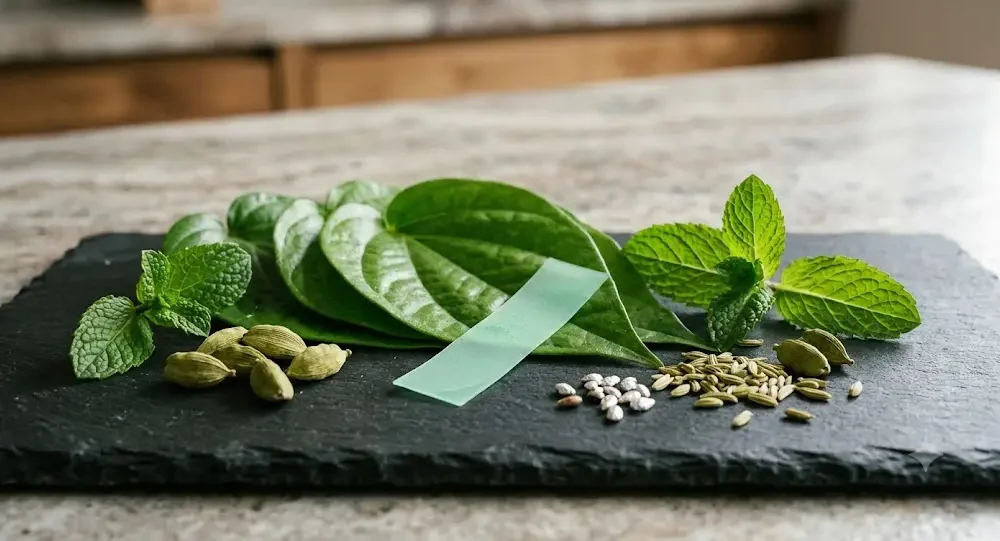
Paan-flavoured mouth freshener without tobacco or supari shown with fresh betel leaves and mint

Paan Mouth Freshener Without Tobacco or Supari: What Should You Choose?

For many Indians, paan is more than a flavour. It is tied to meals, weddings, family gatherings and the familiar ritual of having something refreshing after food.

But modern buyers are also paying much closer attention to what is actually inside the products they consume. That is why searches for a paan mouth freshener without tobacco or a mouth freshener without supari are becoming increasingly relevant.

The problem is that words such as paan, meetha paan, paan masala, mukhwas and paan-flavoured mouth freshener are often used as though they mean the same thing. They do not.

If you enjoy the familiar paan flavour but do not want tobacco or areca nut (supari), the safest way to choose is not by looking at the front of the pack. It is by understanding the format and reading the ingredient information properly.

Can You Get Paan Flavour Without Tobacco or Supari?

Yes. A product can be designed to deliver a paan-inspired flavour without containing traditional paan ingredients such as tobacco or areca nut.

This is an important distinction because flavour and formulation are not the same thing.

A paan-flavoured mint, strip or other mouth freshener may use flavouring ingredients to recreate the sweet, aromatic or cooling profile people associate with paan without being a conventional paan preparation.

That means someone who enjoys the taste of paan does not necessarily have to choose traditional paan, paan masala or a supari-based freshener.

Paan, Supari, Paan Masala and Paan-Flavoured Freshener Are Different

Before choosing a product, it helps to separate a few terms that frequently get mixed together.

Product TypeWhat It Usually MeansWhat You Should Check
Traditional paanBetel leaf filled with a combination of ingredients that varies by preparationWhether it contains supari, tobacco or other additions
Meetha paanA sweeter style of paan often containing flavourings, sweet ingredients and other fillingsDo not assume “meetha” automatically means supari-free
Paan masalaA packaged mixture that commonly contains areca nut along with flavouring ingredientsRead the complete ingredient list carefully
MukhwasAn after-meal freshener that may contain fennel, seeds, spices, sugar coatings and other ingredientsCheck for sugar, supari and the complete ingredient list
Paan-flavoured mouth freshenerA product designed around the flavour profile of paan rather than traditional paan itselfCheck whether it contains tobacco, areca nut, sugar and other ingredients you wish to avoid

If you want to understand what commonly goes into traditional after-meal fresheners, our guide to mukhwas ingredients explains the differences in more detail.

Why Does “Without Tobacco” Not Always Mean “Without Supari”?

This is probably the most important thing to understand when shopping in this category.

Tobacco and supari are two different ingredients.

Supari is another name commonly used for areca nut. A product can therefore be labelled or described as tobacco-free and still contain areca nut.

That distinction matters from a health perspective. The World Health Organization’s International Agency for Research on Cancer has classified areca nut as carcinogenic to humans. The concern is not limited only to products where areca nut is combined with tobacco.

So if your goal is specifically to avoid both ingredients, do not stop after seeing the words “tobacco free”. Look for clear information confirming that the product is also free from areca nut or supari.

What Should You Check Before Buying a Paan Mouth Freshener?

1. Read the Ingredient List, Not Just the Product Name

A name like “paan flavour”, “meetha paan” or “traditional paan taste” tells you about the intended flavour experience. It does not tell you the complete formulation.

Turn the pack around and read what is actually inside it.

If avoiding tobacco and supari is important to you, look specifically for tobacco, areca nut, betel nut or supari in the ingredient information.

2. Check Whether It Is Paan or Simply Paan-Flavoured

A paan-inspired freshener does not need to contain the complete set of ingredients associated with traditional paan.

This can be useful for people who mainly enjoy the aromatic after-meal taste but want something simpler for work, travel or everyday use.

3. Look at the Sugar Content

Tobacco and supari are not the only things worth checking.

Traditional after-meal fresheners can also contain sugar, sugar-coated seeds or sweetened ingredients. If you use a mouth freshener regularly throughout the day, repeated sugar exposure may be something you prefer to avoid.

For a deeper comparison, read our guide on why choosing a sugar-free mouth freshener matters.

4. Think About How You Will Actually Use It

A bowl of mukhwas at home and a mouth freshener in your pocket solve slightly different problems.

If you mainly want something after dinner at home, traditional seed-based fresheners may fit the occasion perfectly well, provided you are comfortable with their ingredients.

If you need something before a client meeting, during a commute, after lunch at work or while travelling, portability becomes much more important.

That is where dissolving mouth freshener strips offer a different kind of convenience. They are compact, require no chewing and disappear after use without leaving wrappers or seeds to dispose of.

What Is a Supari-Free Paan Mouth Freshener?

In simple terms, a supari-free paan mouth freshener gives you a paan-inspired flavour without using areca nut as the base of the product.

Depending on the format, the experience may be quite different from traditional paan.

A dissolving strip, for example, is not meant to recreate the chewing experience, texture or ritual of eating paan. Its purpose is much simpler: deliver a familiar flavour and a feeling of freshness in a portable format.

That distinction is useful because it lets buyers choose based on what they actually want.

If what you enjoy is the flavour, you may not need the traditional format at all.

Where Does Mountain Breeze Paanmint Fit?

Mountain Breeze’s Paanmint is designed for people who enjoy a culturally familiar paan-inspired taste but prefer the convenience of a modern dissolving mouth freshener strip.

Mountain Breeze describes Paanmint as a sugar-free paan-flavoured strip without tobacco or areca nut. Instead of chewing paan, supari or loose mukhwas, the strip is placed on the tongue and dissolves in the mouth.

That makes the format useful after meals, during travel, at family gatherings or whenever carrying traditional mouth freshener is inconvenient.

Paanmint is only one flavour option in the Mountain Breeze range. Cool Mint is designed for people who prefer a sharper cooling sensation, while Spearmint offers a milder mint profile.

If you are unsure which one suits you, see our complete Cool Mint vs Spearmint vs Paanmint comparison.

Traditional Paan vs Paan-Flavoured Breath Strips

FactorTraditional PaanPaan-Flavoured Breath Strip
FormatChewed preparationThin dissolving strip
IngredientsVaries significantly by preparationPackaged formulation with a defined ingredient list
SupariMay be presentCan be formulated without it
TobaccoMay or may not be presentCan be formulated without it
PortabilityUsually less convenientEasy to carry
Chewing requiredYesNo
Best suited forTraditional experience and ritualQuick, discreet freshness with a paan-inspired flavour

Neither comparison needs to become an argument about tradition versus modern products. They are simply different formats designed for different preferences.

Who Might Prefer a Paan-Flavoured Strip?

A paan-flavoured dissolving freshener may make sense if you:

  • Enjoy the familiar taste associated with paan but do not want tobacco or supari.
  • Want something compact enough to carry to work or while travelling.
  • Prefer a product that does not require chewing.
  • Want to avoid loose mukhwas spilling inside a bag or pocket.
  • Prefer a sugar-free mouth freshener.
  • Want a familiar after-meal flavour in a more modern format.

If those priorities match your routine, you can explore Mountain Breeze mouth freshener strips and compare the current Paanmint, Cool Mint, Spearmint and combo options.

Do Not Confuse Mouth Freshening With Oral Care

Whether you choose mukhwas, mint, gum or a dissolving strip, a mouth freshener should remain exactly that: a freshener.

It does not replace brushing, cleaning between your teeth, tongue cleaning or regular dental care.

If unpleasant breath remains persistent despite normal oral hygiene, repeatedly covering it with stronger flavours is not the best solution. Persistent bad breath can sometimes have an underlying dental or medical cause that deserves proper attention.

Final Thoughts

Choosing a paan mouth freshener without tobacco or supari becomes much easier once you separate the flavour from the traditional format.

If you enjoy paan mainly for its familiar after-meal taste, there are modern products designed to recreate that flavour without requiring traditional paan ingredients.

The key is to read labels carefully.

“Tobacco free” does not automatically mean “supari free”, and a paan-flavoured product does not necessarily contain paan. Look at the actual ingredients, sugar content and product format before deciding.

For people who want the familiar character of paan in a compact, sugar-free and no-chewing format, a paan-flavoured dissolving strip can be a practical alternative.

Frequently Asked Questions

Can a paan mouth freshener be made without tobacco?

Yes. Paan flavour can be used in mouth fresheners that do not contain tobacco. However, always check the ingredient list rather than assuming this from the flavour name alone.

Is tobacco-free paan also supari-free?

Not necessarily. Tobacco and supari are different ingredients. A product can contain areca nut or supari without containing tobacco, so people who want to avoid both should check for both separately.

Is supari the same as areca nut?

Yes. Supari is a commonly used name for areca nut or betel nut in India. The World Health Organization’s cancer research agency classifies areca nut as carcinogenic to humans.

Does Paanmint contain tobacco or supari?

Mountain Breeze describes its Paanmint mouth freshener strips as paan-flavoured, sugar-free strips made without tobacco or areca nut. They are intended to provide a familiar flavour in a dissolving strip format rather than recreate traditional paan.

Is a paan-flavoured strip the same as traditional paan?

No. Traditional paan is a betel-leaf preparation containing a combination of ingredients chosen by the maker. A paan-flavoured strip is a packaged mouth freshener designed around a paan-inspired flavour and dissolves on the tongue without chewing.

Can a mouth freshener replace brushing?

No. Mouth fresheners provide temporary freshness and should be used between normal oral-care routines. Brushing, cleaning between the teeth, tongue cleaning and professional dental care remain important.

Man pulling out Mountain Breeze mouth freshener strips from bag during monsoon commute

Monsoon Survival Kit: Staying Fresh During Chai, Pakode & Rainy Commutes

Monsoon Survival Kit: Staying Fresh During Chai, Pakode & Rainy Commutes

Monsoon has its own rhythm – hot chai at every stop, pakode appearing at exactly the wrong moment before a meeting, and commutes that leave you rushing straight from a wet auto or bike into work without a spare minute to brush or rinse. Staying fresh during these months isn’t about changing your routine completely – it’s about having the right things within reach at the right moments.

Here’s a practical, situation-by-situation kit for getting through monsoon without your breath giving away every cup of chai and plate of pakode you’ve had that day.

The Chai-Pakode Problem

Monsoon and fried snacks go together almost automatically – the weather makes hot, oily food feel more appealing, and offices, homes, and street stalls lean into it. The issue is that this combination hits your breath from two directions at once: chai reduces saliva flow and leaves tannins behind, while fried, oily snacks coat the tongue and take longer to fully clear than lighter food would.

You don’t need to skip your evening chai and pakode to avoid this – you just need a quick reset afterward rather than letting the residue sit until your next proper brush. A dissolving mint strip right after finishing handles this in seconds, without needing to find water or step away to a washroom.

Wet Commute Breath Care: Bike, Auto & Metro

Monsoon commutes come with their own version of this problem. A rushed breakfast before a bike ride in the rain, a quick vada pav grabbed between an auto change, or a packed metro ride with no room to even check your phone, let alone brush your teeth – these are exactly the moments where a mouth freshener earns its place in your bag.

A few habits that help specifically during monsoon commutes:

  • Keep strips in your commute bag, not just your desk drawer – the moments you need them most are usually mid-commute, not at your desk
  • Use one right before you reach your destination, not right after eating – this way the freshness is at its peak exactly when you’re walking into the office or meeting someone
  • Carry a small bottle of water if your commute allows it – even a few sips before a strip improves how effectively it works, since a slightly hydrated mouth responds better than a completely dry one

This is the same logic we covered in our guide on best mouth fresheners for work, dates, and travel – the format that works is one you don’t have to think about or plan around.

Your Monsoon Travel Bag Essentials

If your monsoon plans stretch beyond the daily commute – a weekend trip to a hill station, a family outing, or travel where you’ll be in and out of humid, damp environments for hours – it helps to think of breath care as part of your travel bag, not an afterthought:

  • A pack of Mountain Breeze strips – pick Cool Mint if you want maximum freshness after heavier travel-day meals, or see our full flavour comparison guide to pick what suits you
  • A small reusable water bottle – humidity suppresses thirst, so you’re likely to drink less than you think you need unless you’re deliberate about it
  • A travel-size toothbrush if you’re away overnight – strips handle the gaps between brushing, they’re not a full replacement for it

College & Office Rainy Day Routine

Rainy days tend to compress your usual routine – you leave a little later because of the weather, skip the after-breakfast brush because you’re rushing, and end up relying on quick fixes through the day more than usual. A simple routine that works well for both college and office days during monsoon:

  1. Morning: a proper brush if you have time, or at minimum a strip right after breakfast if you’re rushing
  2. Mid-morning: a strip after your first chai break
  3. Post-lunch: a strip after lunch, especially if it included anything fried or spiced
  4. Evening: a strip after your evening chai-and-snack break, before heading into any evening plans or a longer commute home

Since Mountain Breeze strips are sugar-free, this kind of repeated, several-times-a-day use doesn’t carry the same tooth-decay concerns that sugary mints or candies would – you can read more on this in our guide on sugar-free mouth fresheners and dental health.

Quick Reference: What to Carry Where

WhereWhat to Keep ThereWhy
Office desk drawerA jar or larger packCovers multiple uses across the workday without running out
Commute bag / backpackA pocket-sized packAvailable exactly when you can’t access water or a washroom
Two-wheeler storage / car gloveboxA small blister packReady right after a ride, before walking into your destination
Travel bag (weekend trips)A combo flavour packFlexibility across different meals and situations over a multi-day trip

Frequently Asked Questions

How can I keep my breath fresh during monsoon without carrying water everywhere?

A dissolving mouth freshener strip is the most practical option since it needs no water and works in seconds – ideal for commutes, classrooms, or meetings where stepping out to rinse isn’t realistic.

Does eating pakode every day during monsoon really affect breath that much?

Fried, oily food takes longer to clear from the mouth and tends to leave more residue than lighter meals, which is why breath can feel more noticeably affected on days with frequent fried snacking. A quick strip after each snack break helps offset this without requiring any change to your eating habits.

What should I carry for breath freshness on a rainy commute?

A pocket-sized pack of mouth freshener strips is the easiest option – small enough to fit in any bag or pocket, and usable without water right before you reach your destination.

Is it okay to use mouth freshener strips multiple times a day during monsoon?

Yes, as long as they’re sugar-free. Since monsoon routines often involve more frequent tea and snack breaks, a sugar-free strip is well suited to repeated daily use without the concerns that come with sugary alternatives.

What’s the best flavour to carry during monsoon?

Spearmint works well for frequent, all-day use like the office chai routine, while Cool Mint is better suited after heavier fried snacks or a long, humid commute. Our flavour comparison guide covers this in more detail.

Final Thoughts

Monsoon doesn’t need to mean giving up chai, pakode, or your usual commute – it just means being a little more deliberate about the gaps in between. Keep strips wherever your day actually takes you (desk, bag, glovebox), drink a bit more water than you feel like you need, and you’ll get through the rainy season without ever having to think twice about your breath.

Stock up on Mountain Breeze strips for your commute bag, desk, and travel kit before the season gets any wetter.

Woman using Mountain Breeze mouth freshener strip during monsoon rain to fight humidity-related bad breath

Why Your Breath Smells Worse in Monsoon: Humidity, Fungal Growth & Dampness Explained

Why Your Breath Smells Worse in Monsoon: Humidity, Fungal Growth & Dampness Explained

If you’ve noticed your breath feels worse during the rainy months – even on days when you haven’t eaten anything unusual – you’re not imagining it. Monsoon weather changes the environment inside your mouth in ways that summer heat and winter dryness don’t, and the result is often breath that feels sticky, sour, or just “off” no matter how often you brush.

Here’s what’s actually happening, and why it’s a different problem from the bad breath you deal with in peak summer.

How Humidity Changes What’s Happening in Your Mouth

Your mouth relies on a steady flow of saliva to rinse away food particles and keep odour-causing bacteria in check. High humidity affects this balance in an indirect but noticeable way – the constant dampness in the air reduces how thirsty you feel, so most people drink less water during monsoon compared to summer. Less water intake means less saliva production, and less saliva means bacteria have more time to sit undisturbed on your tongue and between your teeth.

At the same time, monsoon days are often spent moving between air-conditioned indoor spaces and humid outdoor air. This back-and-forth dries out the mouth faster than a single stable climate would, which is part of why breath can feel noticeably worse by mid-afternoon during the rainy season.

Fungal and Bacterial Growth Increases in Damp Conditions

Moisture is one of the main things bacteria and fungi need to multiply, and monsoon delivers exactly that – both in the environment around you and inside your mouth if oral hygiene slips even slightly. The bacteria responsible for bad breath thrive in warm, moist, low-oxygen conditions, and the back of the tongue during monsoon is often exactly that: coated, slightly damp, and rarely cleaned as thoroughly as the teeth.

Damp weather can also make it easier for oral thrush and other fungal overgrowth to take hold, particularly if your immune system is already working overtime dealing with seasonal colds or infections – both of which are common during monsoon. This is one of the lesser-known reasons breath can smell different (often described as more sour or yeasty) during the rainy season compared to a typical summer or winter odour.

Monsoon Foods That Make It Worse

The season’s food habits don’t help either. Monsoon in India usually means more fried snacks – pakode, samosas, bhajiyas – alongside frequent cups of chai and coffee. Each of these contributes to bad breath on its own:

  • Fried, oily food takes longer to digest and leaves a heavier residue on the tongue and teeth
  • Chai and coffee reduce saliva production and coat the mouth with tannins that bacteria feed on
  • Comfort eating during rainy days often means smaller sips of water throughout the day, worsening the dry-mouth effect already caused by humidity

We’ve covered how food-related odour builds up between brushing in more detail in our guide on oral hygiene between brush cycles, and the tea-and-coffee angle specifically in breath fresheners for coffee and tea lovers.

Monsoon Bad Breath vs Summer Bad Breath: What’s Different

FactorMonsoonSummer
Main causeHumidity, reduced water intake, damp environmentHeat, sweating, dehydration
Bacterial behaviourThrives in dampness and low airflowThrives in dry, dehydrated mouths
Common trigger foodsFried snacks, chai, coffeeSpicy food, cold drinks, ice cream
Odour characterOften described as sour or mustyOften described as dry or stale
Fastest fixHydration + tongue cleaning + mint stripHydration + mint strip

For the summer-specific breakdown, see our earlier guide on why bad breath gets worse in Indian summers – the underlying fix (staying hydrated, keeping the tongue clean, having a fast option on hand) is similar, but the cause is different enough that it’s worth understanding both.

What Actually Helps During Monsoon

  • Drink water even when you don’t feel thirsty – humidity suppresses thirst signals, so set reminders if needed rather than relying on how thirsty you feel
  • Clean your tongue, not just your teeth – this is where most of the bacteria responsible for monsoon breath actually sit
  • Keep a mouth freshener strip on hand – for the gaps between meals and brushing when you can’t rinse or brush, a dissolving mint strip gives an instant reset without needing water
  • Cut back slightly on fried snacks and excess chai – you don’t need to eliminate them, but balancing them with more water helps offset the residue they leave behind
  • Watch out for a persistently sour or unusual smell – if it doesn’t improve with better hydration and hygiene, it’s worth getting it checked, since persistent fungal-type odour can sometimes need more than home care

Frequently Asked Questions

Why does my breath smell different during monsoon compared to other seasons?

Humidity reduces how much water you naturally drink, which lowers saliva production and lets odour-causing bacteria multiply more easily. Damp conditions also encourage fungal and bacterial growth in general, which can give monsoon breath a distinct sour or musty quality compared to summer or winter.

Can humidity alone cause bad breath?

Not directly, but it contributes heavily by suppressing thirst and encouraging bacterial growth in a moist environment. Combined with reduced water intake and monsoon eating habits, humidity becomes a significant indirect cause of worse breath during the rainy season.

Does drinking more water actually help with monsoon bad breath?

Yes. Since reduced water intake is one of the main drivers of monsoon breath, deliberately drinking water throughout the day – even without feeling thirsty – is one of the most effective things you can do to improve it.

What’s the fastest way to fix monsoon breath during the day?

A sip of water followed by a sugar-free mouth freshener strip works well when you don’t have access to a toothbrush. The water helps restore saliva flow, and the strip handles the immediate odour on your tongue and teeth.

Is monsoon breath a sign of a bigger oral health issue?

Occasional monsoon-related breath changes are normal and usually resolve with better hydration and tongue cleaning. If the odour is persistent, unusually strong, or accompanied by other symptoms, it’s worth checking with a dentist, since ongoing fungal or bacterial overgrowth can sometimes need more targeted treatment.

Final Thoughts

Monsoon breath isn’t just “regular” bad breath showing up at a different time of year – it’s driven by a specific combination of humidity, reduced water intake, and the season’s fried, tea-heavy eating habits. Once you know that, the fix is straightforward: drink more water than you think you need, don’t skip the tongue when you brush, and keep something fast on hand for the hours in between.

Keep a pack of Mountain Breeze strips in your bag through the rainy season – they dissolve instantly with no water needed, which makes them one of the easiest habits to build into a monsoon routine.

Cool Mint vs Spearmint vs Paanmint

Cool Mint vs Spearmint vs Paanmint: Which Mountain Breeze Flavour Should You Pick?

Three flavours, one decision, and most first-time buyers end up picking whichever one has the nicest-looking pack. That works fine – but if you actually want a flavour that fits your daily routine, your tolerance for intensity, and the situations you use a mouth freshener in most, there’s a clearer way to choose.

This guide breaks down Cool Mint, Spearmint, and Paanmint honestly – what each one actually feels like, who it suits best, and which one to start with if you’re buying Mountain Breeze for the first time.

The Quick Answer

FlavourIntensityBest ForIdeal Situation
Cool MintStrong, icy, sharpMaximum freshness impactAfter heavy meals, alcohol, smoking, or when you want a noticeable cooling burst
SpearmintGentle, mellow, smoothFrequent, all-day useOffice desk, multiple uses a day, sensitive palates
PaanmintModerate, culturally familiarTraditional taste with modern formatAfter meals, family gatherings, gifting, festive occasions

Cool Mint – For When You Want Maximum Intensity

Cool Mint is built around a strong menthol punch. The moment the strip dissolves, it delivers a sharp, icy sensation that’s hard to miss – this is the flavour people reach for when they want to feel like their mouth has been completely reset, not just lightly refreshed.

That intensity makes it particularly effective in situations where you’re working against a strong existing odour. If you’ve just had a spicy meal loaded with garlic and onion, finished a cigarette, or had a couple of drinks, Cool Mint’s strength is exactly what cuts through most effectively. We’ve covered why this matters in more detail in our guides on removing alcohol smell from your mouth and using a mouth freshener after smoking – both point to Cool Mint as the stronger option when the odour you’re dealing with is stronger than usual.

The trade-off is that some people find it a little too intense for repeated use through the day – five Cool Mint strips in a row can feel sharper than necessary if you’re just topping up freshness after a cup of tea. You can browse the full range on our Cool Mint strips page.

Spearmint – For Frequent, All-Day Use

Spearmint is the gentler sibling. It still delivers a clean, minty freshness, but without the sharp cooling intensity of Cool Mint. The flavour is smoother and slightly sweeter, which makes it far more comfortable to use multiple times across a single day without feeling like you’re overdoing it.

This is the flavour that works best for people who keep a pack on their desk and reach for it after every cup of chai, after lunch, and again mid-afternoon. It’s also a good starting point for anyone who finds strong mint flavours a bit overwhelming, or for first-time strip users who aren’t used to the sensation of a dissolving strip yet. Read more about why this profile suits daily, repeated use in our full breakdown of why Spearmint is a popular everyday choice.

Paanmint – For Traditional Taste in a Modern Format

Paanmint takes a different approach altogether. Instead of going purely mint-forward, it blends the familiar taste of paan with a clean mint finish – giving you something that feels culturally recognisable while still delivering the instant, sugar-free freshness of a dissolving strip.

This makes Paanmint a strong choice after meals, particularly in households and gatherings where paan or mukhwas is already part of the after-dinner routine. It’s also the flavour most people gravitate towards when buying for parents, grandparents, or guests who are used to a more traditional mouth freshener taste but might appreciate the convenience of a sugar-free strip over loose mukhwas. For more on how modern strips compare to that traditional format, see our detailed guide on mukhwas ingredients and how strips compare.

Paanmint is also consistently the top pick for festive and wedding gifting – we’ve covered why in our guide to mouth freshener gifting for Indian weddings and celebrations.

How to Choose Based on Your Situation

SituationRecommended FlavourWhy
Office desk, multiple uses a daySpearmintGentle enough for repeated use without feeling excessive
After alcohol or smokingCool MintStrongest cooling effect cuts through more stubborn odours
After a heavy, spicy mealCool Mint or PaanmintBoth handle strong food odours well; Paanmint if you want a familiar taste
Family gatherings, after dinner at homePaanmintCulturally familiar flavour that fits the traditional after-meal moment
Gifting for weddings or festivalsPaanmint or a mixed comboMost universally appreciated across age groups
First time trying breath stripsSpearmintMildest introduction to the dissolving-strip sensation
Gym, post-workoutCool MintStrong, energising sensation pairs well with post-exercise freshness

Can You Mix Flavours?

Yes, and this is genuinely the easiest way to figure out your preference without committing to a single flavour upfront. Mountain Breeze offers combo packs that pair Cool Mint with Spearmint, or Paanmint with Cool Mint, so you can carry two options and use whichever fits the moment – Spearmint through the day, Cool Mint after a heavy meal or a smoke break, for instance. This is also the safest choice if you’re buying for a household or an office where different people will have different preferences. You’ll find the full range of single-flavour and combo packs on the Mountain Breeze shop page.

Which Flavour Should First-Time Buyers Start With?

If you’ve never used a dissolving mouth freshener strip before, Spearmint is the easiest entry point – it lets you get used to the format itself (how quickly it dissolves, how the freshness spreads) without the sharper intensity of Cool Mint competing for your attention. Once you’re comfortable with strips as a format, trying Cool Mint and Paanmint becomes about matching the flavour to the situation rather than adjusting to something new. For a broader look at how strips compare to other mouth freshener formats before you buy, our guide on choosing the best mouth freshener in India is a useful starting point.

Frequently Asked Questions

Which Mountain Breeze flavour lasts the longest?

All three flavours dissolve within roughly the same 5–15 seconds and offer comparable freshness duration. Cool Mint often feels like it “lasts longer” simply because the initial sensation is more intense, not because the underlying formula works differently.

Is Paanmint the same as regular paan or mukhwas?

No. Paanmint is a sugar-free mint strip flavoured to evoke the taste of traditional paan, without any of the ingredients found in actual paan (including no tobacco or areca nut). It’s designed as a modern, convenient alternative to traditional after-meal fresheners.

Which flavour is best for kids or elderly family members?

Spearmint’s milder profile is generally the most comfortable choice for people who are sensitive to strong mint intensity, including elderly users. For guidance specific to children, see our guide on mouth freshener safety for kids.

Can I buy a sample pack with all three flavours?

Yes, Mountain Breeze offers combo and multi-flavour packs so you can try Cool Mint, Spearmint, and Paanmint together before deciding on a single-flavour pack. Check current combo options on the shop page.

Does flavour affect how well the strip works?

No – all three flavours use the same Orally Disintegrating Strip (ODS) technology and are equally effective at neutralising odour. The difference is purely in taste and intensity, not performance.

Final Thoughts

There’s no single “best” flavour among Cool Mint, Spearmint, and Paanmint – there’s only the one that fits how and when you actually use a mouth freshener. If you want maximum impact after something strong, Cool Mint. If you’re using it multiple times a day, Spearmint. If you want something that feels familiar and works well for gifting or family settings, Paanmint.

Not sure yet? Start with a combo pack, use each flavour for a week, and you’ll know exactly which one to reorder. Explore the full Mountain Breeze range here.

mouth freshener after smoking

Mouth Freshener After Smoking a Cigarette: Does It Actually Work?

You step out for a smoke break, come back in, and immediately wonder if anyone can tell. Popping a strip or a mint feels like the obvious fix – but does it actually get rid of cigarette smell, or is it just covering it up for a few minutes?

The honest answer is a bit of both, and understanding why changes how you use a mouth freshener after smoking. This guide breaks down what actually causes “smoker’s breath,” what a mouth freshener can and can’t do about it, and the routine that works best if you want to walk back into a meeting, a family gathering, or a date without that giveaway smell.

Why Cigarette Smell Lingers So Long After Smoking

Cigarette smoke leaves behind more than just a smell sitting on your tongue. Tar and nicotine coat the teeth, tongue, and the soft tissue inside your mouth, and these residues don’t rinse away easily with water alone. On top of that, smoke is drawn deep into your lungs and throat, which means part of the odor is released again every time you exhale – not unlike how alcohol breath keeps returning because it’s released through the lungs, cigarette smell works the same way.

Smoking also dries out your mouth. Nicotine reduces saliva production, and saliva is what normally washes away bacteria and odor-causing particles throughout the day. With less saliva in circulation, the bacteria that break down leftover smoke residue multiply faster, which is part of why the smell seems to hang around long after the cigarette is finished.

What Actually Causes “Smoker’s Breath”

Smoker’s breath isn’t caused by one single thing – it’s a combination of four factors working together:

  • Tar and residue on the tongue and teeth – smoke particles settle on oral surfaces and continue releasing odor for hours
  • Sulfur compounds – smoking encourages the same odor-producing bacteria responsible for regular bad breath, and it accelerates their activity
  • Dry mouth – reduced saliva means less natural cleansing, so odor builds up faster than usual
  • Lung and throat residue – a portion of the smell is exhaled gradually over time, which is why the smell can return even after brushing

This is very similar to the mechanism behind lingering food or drink odors, which we’ve covered in detail in our guide on how bacteria rebuild in the mouth between brushing cycles.

Does a Mouth Freshener Actually Remove Cigarette Smell?

Here’s the direct answer: a mouth freshener neutralizes and masks the surface-level smell very effectively, but it cannot fully eliminate the portion of odor coming from your lungs. That part fades naturally over the next 30 to 60 minutes as your body clears the smoke residue from your respiratory system.

What this means practically is that a good mouth freshener strip handles the part of the problem people actually notice in conversation – the smell on your breath as you speak, which comes primarily from your tongue, teeth, and the moisture in your mouth. A dissolving mouth freshener strip spreads mint oils evenly across your tongue and inner mouth within seconds, which directly targets where most of the noticeable smell is coming from.

So the strip isn’t lying to you when it makes your breath smell fresh – it’s just not a substitute for time and hydration when it comes to the deeper, lung-based portion of the odor.

What Works Best After a Cigarette (And What Doesn’t)

MethodSpeedEffectivenessPractical?
Mouth freshener stripsInstant (5–10 sec)High – covers tongue, teeth, and surface odorYes
Drinking waterGradualMedium – rehydrates and restores saliva flowYes
Chewing gumGradualLow-Medium – masks only, fades within minutesYes
Brushing teeth and tongue3–5 minutesHigh – if tongue is includedDepends on access
Perfume or deodorant near the mouthInstantNone – mixes with smell, doesn’t remove itAvoid
CoffeeInstantNone – adds a second strong smell on topAvoid

The pattern here is the same one we found when we looked at removing alcohol smell from breath – the fastest, most reliable fixes are the simplest ones: water, a strip, and (when possible) a proper brush.

A Simple Routine for After Every Cigarette

  1. Drink a few sips of water right after finishing – this starts restoring saliva flow immediately
  2. Use a Mountain Breeze mouth freshener strip on your tongue, letting it dissolve fully rather than chewing it
  3. If you’re heading straight into a conversation, use a second strip about 10–15 minutes later – this covers you through the window where lung-exhaled odor is still fading
  4. When you do have access to a toothbrush, focus on the tongue, not just the teeth – this is where most of the lingering residue actually sits

Before Meetings, Family, or Social Situations

If you’ve had a cigarette right before walking into a meeting, a family dinner, or a date, a single strip used at the door isn’t always enough on its own. A more reliable approach:

  • Use a strip immediately, then a second one 10 minutes later if you have the time gap – this compensates for the fact that some odor is still being exhaled
  • Avoid smoking right before eating something with garlic, onion, or strong spices – the two odors combine and become harder to manage with a single freshener
  • Keep a pack in your pocket or bag rather than relying on remembering to carry one – see our guide on best mouth fresheners for work, dates, and travel for how to build this into a daily habit

How Often Can You Use a Mouth Freshener If You Smoke Regularly?

If you smoke multiple times a day, using a sugar-free strip after each cigarette is generally fine for daily use – the concern with frequency usually comes from sugar-based mints or gum, not sugar-free dissolving strips. Mountain Breeze strips are sugar-free and vegetarian, which is exactly why they’re suited to this kind of repeated, throughout-the-day use rather than an occasional touch-up. You can read more about why the sugar-free format matters for frequent daily use in our guide on sugar-free mouth fresheners and teeth health.

That said, a mouth freshener only manages the breath side of smoking – it doesn’t reduce any of the other effects of smoking on your body. If cigarette smell is something you’re managing multiple times a day, it’s worth keeping in mind that quitting is the only way to remove the smell (and the underlying cause) completely. A freshener is a practical short-term fix, not a long-term solution.

Frequently Asked Questions

Does mint really get rid of cigarette smell, or just cover it up?

It does both, depending on where the odor is coming from. Mint from a dissolving strip actively neutralizes odor-causing compounds on the tongue and inner mouth, which is where most of the noticeable smell during conversation comes from. It cannot stop the smaller portion of odor released gradually through your lungs – that fades naturally over time.

How long does cigarette breath last after smoking?

Surface-level mouth odor can be significantly reduced within seconds using a mouth freshener strip. The lung-exhaled component of the smell typically fades over 30 to 60 minutes as your body clears the smoke residue.

Is it safe to use mouth freshener strips after every cigarette?

Yes, as long as the strip is sugar-free. Mountain Breeze strips are sugar-free and vegetarian, making them safe for repeated use throughout the day without the tooth-decay concerns that come with sugary mints or candies.

What’s the fastest way to get rid of cigarette smell before a meeting?

Drink a little water, then use a mouth freshener strip on your tongue and let it dissolve completely. If you have 10–15 minutes before the meeting, use a second strip closer to when you actually walk in – this covers the tail end of the lung-exhaled smell.

Does chewing gum work better than a mouth freshener strip for cigarette smell?

Gum can help through the extra saliva production from chewing, but it only masks odor rather than actively neutralizing it, and the effect fades once you stop chewing. For a full breakdown, see our comparison on mouth freshener strips vs chewing gum.

Final Thoughts

A mouth freshener isn’t a magic eraser for cigarette smell, but used correctly, it handles the part of the problem that actually matters in day-to-day conversations – the smell on your breath as you speak. Pair a Mountain Breeze strip with a little water and, when you can, a proper brush of the tongue, and you’ll walk back into any room without that giveaway smell following you in.

Keep a pack in your pocket or bag so it’s there exactly when you need it – no water, no chewing, just a strip and a few seconds. If you also deal with this after drinks, our guide on removing beer and alcohol smell from your mouth covers the same routine for those situations.

Mountain Breeze mouth freshener strip use karte hue beer ki smell hatane ke liye

Beer Ki Smell Kaise Hataye Mouth Se

Beer Ki Smell Kaise Hataye Mouth Se

Beer pine ke baad sabse pehla tension yeh hota hai ki “mouth se smell to nahi aa rahi?” Office meeting ho, ghar pe parents se baat karni ho, ya kisi se milna ho – beer ki smell mouth se itni jaldi nahi jaati jitna hum sochte hain. Aur sirf paani peene ya mint chabane se yeh problem fully solve nahi hoti.

Is blog mein hum simple aur practical tariके batayenge ki beer ki smell mouth se kaise hataye, fast aur effectively.

Beer Ki Smell Itni Der Tak Kyun Rehti Hai?

Yeh samajhna important hai ki beer ki smell sirf mouth ke andar nahi hoti – jab hum beer peete hain, to uska kuch hissa blood mein absorb ho jaata hai aur breath ke through bhi release hota hai. Isi liye sirf mouth wash ya brush karne se temporary relief milta hai, lekin smell thodi der baad wapas aa jaati hai.

Yeh hi reason hai ki sirf ek baar mint khaane se kaam nahi chalta – beer ki smell baar baar wapas aati hai jab tak alcohol body se fully process nahi ho jaata.

Kya Cheezein Kaam Nahi Karti

  • Sirf chewing gum: Thodi der ke liye mask karta hai, lekin breath ke through aane wali smell pe koi effect nahi padta.
  • Coffee peena: Bahut log sochte hain coffee se smell chali jaati hai, lekin yeh sirf ek smell ke upar dusri smell add kar deta hai.
  • Perfume ya deo mouth ke paas spray karna: Yeh kabhi mat karo – yeh harmful ho sakta hai aur smell ko chhupata nahi, mix kar deta hai.

Kya Cheezein Actually Kaam Karti Hain

1. Paani Piyo

Beer peene ke baad jitna ho sake paani piyo. Yeh dehydration kam karta hai, jo smell ko worse banata hai, aur alcohol concentration ko bhi dilute karta hai.

2. Kuch Khaa Lo

Khaali pet pe beer ki smell zyada strong rehti hai. Halka khaana, jaise roti, fruit, ya snacks, smell ko kam karne mein help karta hai.

3. Sugar-Free Mouth Freshener Strips Use Karo

Yeh sabse practical solution hai jab aap bahar ho ya kisi se milne wale ho. Mountain Breeze mouth freshener strips tongue pe rakhte hi seconds mein dissolve ho jaati hain – na chewing ki zarurat, na paani ki. Pocket mein easily fit ho jaati hain, isliye office, party, ya travel ke time bhi use karna asaan hai.

4. Brush Ya Mouthwash (Agar Ghar Pe Ho)

Agar aap ghar pe ho, to brush karna ya mouthwash use karna best option hai. Lekin bahar hote waqt yeh practical nahi hota, isi liye strips jaisa portable option zyada useful hai.

Step-by-Step: Beer Ki Smell Hatane Ka Simple Tarika

  1. Beer khatam hone ke baad ek glass paani piyo.
  2. Agar khaali pet ho, to kuch light khaa lo.
  3. Ek mouth freshener strip use karo turant freshness ke liye.
  4. Har 15-20 minute mein strip dobara use karo agar kisi se close baat karni ho.
  5. Agar possible ho, brush ya mouthwash bhi kar lo jab ghar pahuncho.

Office Ya Family Ke Saamne Kaise Handle Kare

Agar office meeting ya family gathering se pehle beer pee li hai, to yeh extra precautions le sakte ho:

  • Strong khushboo wale snacks (jaise pyaaz, lehsun) avoid karo – yeh smell ko aur badha dete hain.
  • Conversation se pehle ek strip use karo, sirf ek baar nahi balki jab bhi zarurat lage.
  • Apne paas hamesha 2-3 strips rakho bag ya pocket mein, emergency ke liye.

Frequently Asked Questions

Beer ki smell kitne der tak rehti hai?

Yeh depend karta hai kitni beer pee hai, lekin generally smell kuch ghanton tak reh sakti hai kyunki alcohol gradually breath ke through release hota hai.

Kya mouth freshener strips beer ki smell pura hata dete hain?

Yeh smell ko effectively mask aur fresh karte hain, especially jab regularly use kare. Best result ke liye paani aur khaane ke saath combine karo.

Sabse fast tarika kya hai beer ki smell hatane ka?

Paani piyo, kuch khaa lo, aur ek sugar-free mouth freshener strip use karo – yeh combination sabse fast aur practical result deta hai jab aap bahar ho.

Final Baat

Beer ki smell completely turant gayab nahi hoti jab tak alcohol body se process nahi ho jaata, lekin sahi tarike se – paani, halka khaana, aur ek reliable mouth freshener – aap confidently kisi se bhi mil sakte ho bina is tension ke. Apne bag ya pocket mein Mountain Breeze fresh breath strips ka pack rakho, aur jab bhi zarurat ho turant use karo.

Agar aap parties, dates ya travel ke time bhi fresh breath maintain karna chahte ho, hamara guide after drinks ke liye best mouth freshener bhi padh sakte ho.

Person using Mountain Breeze mouth freshener strip after drinks at an office party with cocktails in the background

Best Mouth Freshener for After Drinks: Office Parties, Dates & Travel

Best Mouth Freshener for After Drinks: Office Parties, Dates & Travel

There’s a very specific kind of panic that hits after a couple of drinks at an office party, a date, or mid-travel: “Can people smell it on my breath?” Alcohol breath is one of those things that lingers longer than you’d expect, and most people don’t realise that simple mints or gum barely touch it. If you’ve ever popped three mints in a row hoping it would work, you already know the problem.

This guide covers why alcohol smell is so stubborn, what actually works to deal with it, and how to handle three real-life situations where it matters most: office parties, dates, and travel.

Why Alcohol Smell Is So Hard to Get Rid Of

Alcohol breath isn’t just a coating on your tongue that a mint can mask. A part of the alcohol you drink gets absorbed into your bloodstream and is partially released through your lungs as you breathe, which is actually how breathalyzer tests work. That’s why brushing your teeth or chewing gum only deals with the surface smell and not the one coming from deeper inside.

This is also why the smell tends to come back after 15-20 minutes, even after you’ve had a mint, gum, or even mouthwash. You’re masking it temporarily, not actually neutralising it.

What Actually Helps (And What Doesn’t)

Things that barely work

  • Chewing gum – masks for a few minutes at best, does nothing for breath coming from your lungs
  • Coffee – a common myth; it just adds another strong smell on top
  • Mouthwash alone – effective for a moment, but most people aren’t carrying a bottle to a party or on a date

Things that genuinely help

  • Water – staying hydrated helps dilute alcohol concentration and reduces dry-mouth smell, which makes everything worse
  • Food – eating something slows alcohol absorption and reduces the intensity of breath smell over time
  • Sugar-free mouth freshener strips – these dissolve instantly, are easy to reapply every 15-20 minutes, and don’t add sugar or stickiness to your mouth like gum does

The honest answer is that nothing fully “removes” alcohol breath while alcohol is still in your system. What works best is a combination of water, time, and reapplying something effective every so often, rather than relying on one mint to fix it for the whole evening.

Office Party Situations

Office parties are tricky because you’re usually still expected to be “professional” even while having a drink or two. A few practical habits:

  • Carry a pack of Mountain Breeze mouth freshener strips in your blazer pocket or bag — they’re slim enough to not be noticeable and don’t require water or chewing.
  • Use one right before any one-on-one conversation with a manager or client, not just once at the start of the night.
  • Avoid strong garlic or onion-heavy snacks alongside drinks — they compound the smell problem.

Date Night Situations

Nobody wants to be thinking about their breath in the middle of a good conversation. A simple system helps:

  • Keep a strip ready for right after you finish a drink, not just at the end of the date.
  • Step away for a quick refresh after dinner if you’ve had wine or cocktails with the meal.
  • Sugar-free strips are useful here since sugary mints can leave a sticky aftertaste that doesn’t pair well with a goodnight moment.

Travel Situations

Whether it’s a flight after airport drinks, a road trip stop, or a train journey, breath freshness while travelling comes with its own challenges, no sink nearby, limited bag space, and long gaps between stops.

  • Mouth freshener strips work well here because they need no water and take seconds, ideal for cramped seats or quick stops.
  • Pack a few extra strips for long journeys since you’ll likely want to reapply every couple of hours.
  • If you’re flying, carry strips in your hand luggage since liquids like mouthwash have carry-on restrictions.

A Simple After-Drinks Routine

  1. Drink a glass of water after every alcoholic drink, this alone reduces a lot of the issue.
  2. Eat something light if you haven’t already; an empty stomach makes breath smell worse.
  3. Use a sugar-free mouth freshener strip every 15-20 minutes if you’re going to be talking closely with people.
  4. Don’t rely on just one application before stepping out, the smell does come back as alcohol continues to release through your breath.

Frequently Asked Questions

How long does alcohol smell stay on your breath?

It varies by how much you’ve had, but alcohol breath can linger for several hours since it’s released gradually through your lungs as your body processes the alcohol, not something a single mint can switch off.

Do mouth freshener strips actually work for alcohol breath?

They help mask and freshen breath effectively and instantly, especially when reapplied regularly. They work best as part of a routine (water, food, reapplication) rather than a single one-time fix.

Is mouthwash better than mints for alcohol breath?

Mouthwash can be more thorough for surface-level smell, but it’s not practical to carry around at a party, date, or while travelling. Sugar-free strips offer a similar quick-fix benefit in a more portable format.

What’s the best mouth freshener to carry for parties?

Something sugar-free, fast-dissolving, and pocket-sized works best. Mountain Breeze fresh breath strips are built for exactly this kind of on-the-go use.

Final Thoughts

There’s no single product that erases alcohol breath the moment you use it, but having the right routine, water, food, and a reliable sugar-free mouth freshener on hand, makes a real difference at parties, dates, and while travelling. Keep a pack of strips in your pocket, bag, or car, and you’ll spend a lot less time worrying about your breath and a lot more time enjoying the moment.

If you’re also dealing with the day-after smell, our guide on how to remove alcohol and beer smell from your mouth covers that in more detail.