
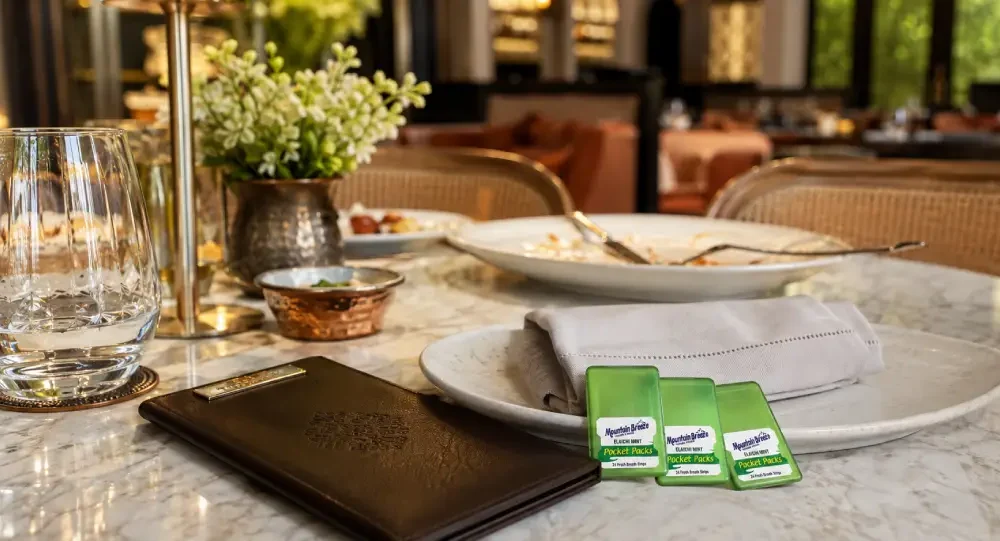
The meal was excellent. The bill has arrived. Your guest stands up to leave and reaches instinctively towards the restaurant counter for something fresh after food.
That tiny moment is easy to overlook, but in Indian hospitality, the mouth freshener has been part of the post-meal experience for generations.
What has changed is the choice.
Restaurants are no longer limited to a bowl of saunf or colourful mukhwas near the cash counter. Hotels, cafés, caterers and premium dining businesses can now choose between loose mukhwas, wrapped mints, chewing gum, mouth freshener strips and other portion-controlled formats.
If you are sourcing a mouth freshener for restaurants or planning a recurring bulk order, the cheapest pack is not automatically the best option. Cost per guest, hygiene, wastage, storage, flavour, presentation and ease of service all matter.
This guide explains how to compare them properly.
Why Do Restaurants Serve Mouth Fresheners After Meals?
Indian food can leave plenty behind: onion, garlic, spices, coffee, tea and rich gravies all have flavours that can remain noticeable after the plate has been cleared.
A small after-meal freshener gives guests a convenient way to refresh their mouth before they leave the restaurant, travel home or continue with the rest of their evening.
There is also a hospitality element to it.
The final five minutes of a dining experience often include the bill, water, mouth freshener and goodbye. These may seem like small details compared with the food, but together they influence how polished the entire experience feels.
For a casual restaurant, a simple traditional mukhwas may fit perfectly. A premium hotel or corporate café may prefer a cleaner, portion-controlled format. The right answer depends on the establishment.
What Types of Mouth Fresheners Can Restaurants Buy in Bulk?
| Format | Main Advantage | Possible Limitation | Best Fit |
| Loose mukhwas | Traditional and familiar | Open serving, variable portions and possible spillage | Traditional restaurants and casual dining |
| Wrapped mints | Easy individual serving | Creates wrappers and may contain sugar | Cafés, counters and reception areas |
| Chewing gum | Familiar and portable | Requires chewing and later disposal | Less formal environments |
| Breath spray | Quick application | Shared bottles are generally unsuitable for guest service | Mostly personal rather than table service |
| Dissolving mouth freshener strips | Compact, portion-controlled and no chewing required | Less traditional than mukhwas | Restaurants, cafés, hotels, banquets and corporate hospitality |
If you want a broader comparison of these formats before choosing one for your property, see our guide to the best mouth freshener options in India.
1. Start With Cost Per Serve, Not Just Pack Price
This is one of the most useful calculations for any restaurant buyer.
Imagine Supplier A offers a cheaper jar but guests take large handfuls. Supplier B costs slightly more but gives you defined portions.
The first jar may actually cost more to operate.
For bulk purchasing, calculate:
Cost per serve = Total purchase cost ÷ Number of usable guest servings
Then include expected wastage.
Loose products can be difficult to portion consistently. One guest takes a pinch, another takes a spoonful, and a third decides the counter bowl is apparently tonight’s complimentary dessert.
Portion-controlled formats make consumption easier to estimate.
2. Estimate How Many Servings You Actually Need
Do not simply order the biggest carton available.
Start with your covers.
For example, a restaurant serving 100 guests per day does not necessarily need 100 mouth freshener portions every day because not every diner will take one.
A practical starting formula is:
Monthly requirement = Average daily covers × Days open × Expected usage rate
If 100 people dine each day, the restaurant operates 30 days and roughly 60% of guests take a freshener, the estimated requirement is around 1,800 servings for the month.
Then add a reasonable operational buffer for busy weekends, events and unexpected demand.
Once you have actual usage data from one or two months, ordering becomes much easier.
3. Consider Hygiene and Guest Handling
A communal bowl of mukhwas is culturally familiar, but it involves more open handling than individually portioned or enclosed formats.
This is especially relevant for:
- premium restaurants,
- hotel restaurants,
- corporate dining facilities,
- banquet service,
- events with large guest volumes, and
- properties trying to minimise open food handling.
A portion-controlled mouth freshener can also be handed over with the bill rather than displayed in an open bowl at the exit.
That gives the service team better control over presentation and consumption.
4. Check the Ingredients Before Ordering Thousands of Units
The phrase “mouth freshener” covers a surprisingly wide range of products.
Traditional mukhwas can contain fennel, seeds, sweetened coatings, spices and other ingredients. Some paan-style products may also contain ingredients a particular business does not want to serve.
If you are comparing traditional options, our guide on what is actually inside mukhwas is a useful place to start.
For packaged products, ask the supplier for the complete ingredient information rather than buying solely on flavour or appearance.
5. Decide Whether Sugar-Free Matters for Your Guests
Many traditional after-meal fresheners and candies are sweetened.
For an occasional restaurant visit, some diners may not care. Others actively look for sugar-free options because they prefer not to add another sugary product after dessert, tea or coffee.
Offering a sugar-free option can therefore make sense for properties serving health-conscious customers or using the freshener repeatedly across business lounges, restaurants and hospitality areas.
You can read more about the distinction in our guide to sugar-free mouth fresheners.
6. Choose Flavours That Match Your Customer Base
The strongest mint is not always the safest bulk-buying decision.
Your restaurant may serve children, families, international tourists, elderly guests and diners who simply dislike intense mint.
That is why flavour selection matters.
A balanced approach may include:
- Cool Mint for guests who like a stronger cooling sensation,
- Spearmint for a smoother, more familiar mint profile, and
- Paanmint for diners who prefer a culturally familiar paan-inspired after-meal flavour.
For a closer comparison, see our Cool Mint vs Spearmint vs Paanmint guide.
A mixed-flavour bulk order can also make sense when the freshener is offered directly to guests rather than automatically placed with every bill.
7. Look at Storage Before You Look at Quantity Discounts
Restaurants naturally want better pricing on larger orders.
But buying six months of stock because the unit cost looks attractive is not clever if half of it sits in a hot storeroom or reaches the end of its usable shelf life.
Before placing a large order, check:
- manufacturing or packing date,
- expiry or best-before information as applicable,
- recommended storage conditions,
- how much dry storage space you have,
- average monthly consumption, and
- how frequently the supplier can replenish stock.
For many establishments, smaller recurring bulk orders are operationally smarter than one enormous annual purchase.
8. Check the Supplier and Pack Information
Bulk hospitality buying is different from grabbing a mint pack for yourself at a supermarket.
You are serving the product to customers, so procurement should check the basics.
For packaged food products in India, look for required label information such as the FSSAI licence details, batch or lot identification and relevant date marking.
FSSAI also provides a public facility through FoSCoS for checking the authenticity and status of food-business licences or registrations.
For larger recurring orders, your procurement checklist can include:
- supplier/business details,
- FSSAI information,
- complete ingredient declaration,
- batch traceability,
- date marking and storage information,
- invoice/GST requirements,
- minimum order quantity,
- dispatch timelines, and
- replacement policy for damaged stock.
What Works Best for Different Hospitality Businesses?
Restaurants
The priority is usually after-meal service, fast replenishment and predictable cost per guest.
Traditional restaurants may still prefer mukhwas. Modern casual and premium restaurants may find portion-controlled strips easier to hand out with the bill.
Cafés
Cafés have a slightly different use case.
Coffee, sandwiches, desserts and long conversations mean customers may appreciate a quick freshener when leaving, but cafés generally do not need a traditional after-meal ritual at every table.
A small counter display or freshener offered with the bill can work better.
Hotels
Hotels may need mouth fresheners across several touchpoints:
- restaurants,
- banquet halls,
- business lounges,
- conference areas,
- in-room welcome amenities, or
- special events.
That makes consistent packaging and inventory planning particularly important.
Caterers and Banquets
For catering, the requirement is often concentrated into a few hours.
A wedding dinner serving 800 guests creates a very different inventory problem from a 60-seat restaurant operating every day.
Easy transport, quick distribution and predictable portions matter more when hundreds of guests may reach the freshener counter within a short period.
How Do Mountain Breeze Strips Fit Into Restaurant and Hotel Service?
Mountain Breeze fresh breath strips are thin dissolving mouth fresheners that are placed on the tongue rather than chewed.
They are sugar-free and available in several flavours and pack configurations.
For hospitality businesses, the practical advantage is the format: strips take up little storage space, do not require chewing and can be offered in controlled quantities rather than through an open communal bowl.
Mountain Breeze currently lists larger configurations including 140, 216, 280 and 432 strips depending on the product and flavour.
You can view the current Mountain Breeze mouth freshener range here.
Website pack prices are retail listings and should not automatically be treated as commercial quotations for a hotel, restaurant or recurring bulk requirement.
If you are purchasing for a restaurant chain, café, hotel, caterer, corporate facility or event business, use the Mountain Breeze Trade Enquiry page to discuss current availability, quantities and commercial requirements directly with the team.
Questions to Ask Before Placing a Bulk Mouth Freshener Order
Before confirming a supplier, get clear answers to these questions:
- How many actual guest servings are included?
- What is my final cost per serving?
- Is there a minimum quantity for trade pricing?
- Can I order mixed flavours?
- What are the manufacturing and date-marking details?
- How should the stock be stored?
- How quickly can repeat orders be dispatched?
- Can supply scale during weddings, festivals or peak season?
- What happens if cartons arrive damaged?
- Can the supplier support multiple restaurant or hotel locations?
Those questions tell you far more than simply asking, “What is your wholesale price?”
Final Thoughts
Choosing a mouth freshener for restaurants, cafés or hotels is a small procurement decision with surprisingly many moving parts.
The best option is not necessarily the cheapest mouth freshener per kilogram or the fanciest product on the table.
Look at the complete operating picture:
cost per serve, guest experience, portion control, ingredients, storage, wastage, service style and supplier reliability.
Traditional mukhwas can still be exactly right for many Indian dining concepts. Individually portioned or controlled formats can make more sense where convenience, presentation and predictable consumption matter more.
And before committing to a large quantity, run a smaller trial in the actual environment where the product will be served.
A procurement spreadsheet may tell you the cost. Your guests and service staff will tell you whether the format actually works.
For recurring or larger requirements, contact Mountain Breeze through the Trade Enquiry page to discuss your requirement.
Frequently Asked Questions
Which mouth freshener is best for restaurants?
There is no single best format for every restaurant. Traditional mukhwas suits many Indian dining concepts, while portion-controlled mints or dissolving strips may suit restaurants that prioritise compact storage, controlled serving and cleaner presentation. Compare the format against your customer profile and service style.
Can restaurants buy mouth freshener in bulk?
Yes. Many mouth freshener products are available in larger packs or through trade supply. For recurring restaurant or hotel requirements, ask the supplier directly about minimum quantities, current bulk pricing, flavour options, dispatch schedules and commercial terms instead of assuming normal retail prices apply.
How much mouth freshener should a restaurant order?
Start with average daily covers, operating days and the percentage of customers likely to take a freshener. Track actual consumption for the first month and use that data to plan future orders, adding a buffer for weekends, events and seasonal peaks.
How do I calculate mouth freshener cost per guest?
Divide your total purchase cost by the number of usable guest servings. Include expected wastage when comparing loose mukhwas with portion-controlled products. The lowest pack price does not always produce the lowest cost per guest.
Should hotels offer sugar-free mouth fresheners?
Offering a sugar-free option can be useful for guests who prefer one, particularly in business lounges, restaurants and other hospitality settings. It does not need to be the only option unless that fits the property’s positioning.
Are mouth freshener strips suitable for cafés?
They can be. Cafés may offer strips at the counter or with the bill for customers who want a quick refresh after coffee or food. Their compact format also makes storage relatively simple.
What should I check when buying mouth freshener wholesale in India?
Check the supplier, ingredient information, applicable FSSAI details, batch or lot identification, date marking, storage instructions, quantity per pack, cost per serving, invoicing requirements and replenishment lead time before placing a significant order.
Does Mountain Breeze accept trade enquiries?
Yes. Mountain Breeze has a dedicated Trade Enquiry page for businesses that want to discuss larger or recurring requirements rather than purchasing only through normal retail listings.


