
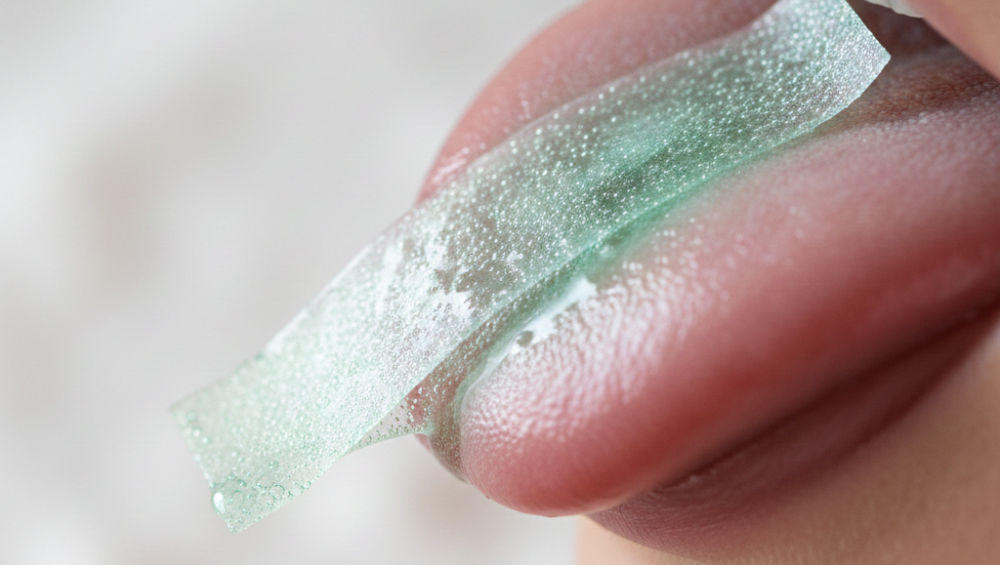
Fresh breath is no longer limited to a morning routine. In everyday life, situations often arise where immediate freshness becomes important, such as stepping into meetings, commuting for long hours, attending social gatherings, or eating strong flavored foods outside the home. In these moments, waiting several minutes for a freshener to activate can feel impractical. This growing need for speed has changed how people evaluate mouth freshening options.
Traditional mouth fresheners have existed for decades, but modern lifestyles demand quicker results. This is where the concept of an instant mouth freshener becomes relevant. Instead of relying on slow flavor release or prolonged use, instant formats focus on rapid activation and even distribution inside the mouth. Understanding which option truly works faster requires looking beyond taste and focusing on how different fresheners perform in real world conditions.
This comparison looks at instant mouth fresheners alongside traditional options based on speed, effectiveness, and everyday usability, helping readers make informed choices without linking breath concerns to poor hygiene.
What Defines an Instant Mouth Freshener
An instant mouth freshener is defined by how quickly it activates and begins delivering freshness after use. Speed refers to the time it takes for the product to dissolve or spread and start neutralizing odor causing compounds inside the mouth. Unlike products that rely on extended chewing or gradual flavor release, instant formats are designed to work within seconds.
Fast dissolving delivery plays a central role in this process. When a freshener comes into direct contact with the tongue and oral surfaces, it spreads active ingredients evenly and immediately. This direct interaction reduces delay and creates a quicker sensory response, which is commonly experienced as freshness.
The growing preference for instant mouth fresheners reflects a broader shift toward convenience focused hygiene solutions. People increasingly choose options that fit into short breaks, busy schedules, and on the go moments rather than products that require time or effort to activate.
Common Types of Traditional Mouth Fresheners
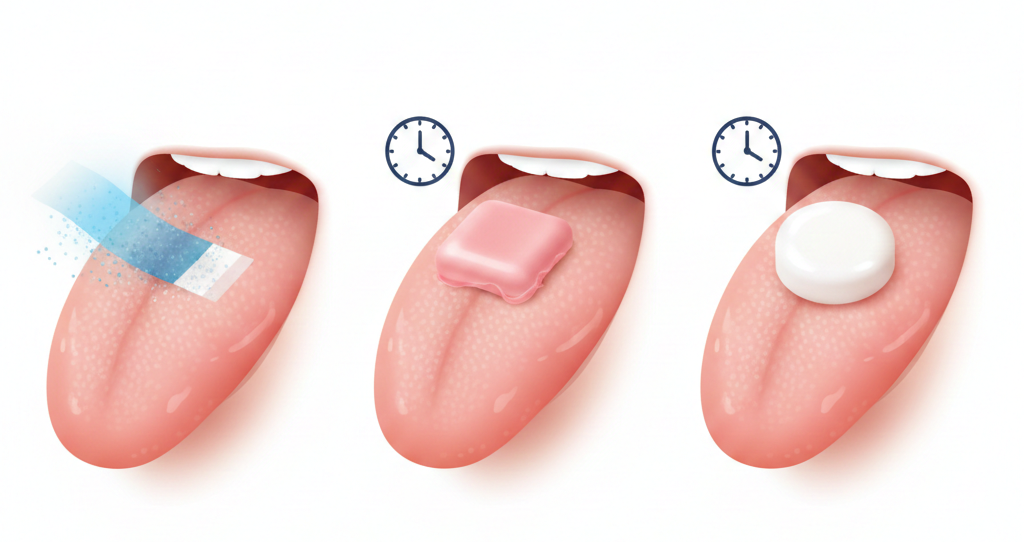
Traditional mouth fresheners usually depend on slower mechanisms to provide freshness. While they are still widely used, their activation time and effectiveness can vary based on format and usage patterns.
Chewing Gums
Chewing gum freshens breath mainly through prolonged chewing, which gradually releases flavor and stimulates saliva. While this can help reduce dryness, it often takes time before noticeable freshness is felt. In many cases, gum masks odor instead of neutralizing it immediately, especially after consuming strong foods or drinks.
Hard Mints and Candies
Hard mints and candies dissolve slowly, releasing sweetness or mint flavor over several minutes. Many of these products contain sugar or sweeteners that remain in the mouth, which can limit their ability to address odor quickly. Because dissolution is slow, freshness tends to build gradually rather than instantly.
Mouth Sprays and Liquid Fresheners
Mouth sprays provide a quick initial sensation but often lack even distribution across the mouth. While the effect may feel immediate, it usually fades quickly if dryness or odor causing compounds remain. Some liquid fresheners may also contribute to dryness, reducing their overall effectiveness.
How Instant Mouth Fresheners Work
Instant mouth fresheners are designed to activate as soon as they come into contact with the tongue. Instead of relying on chewing or slow dissolution, these formats use fast dissolving technology that allows active ingredients to spread evenly across the mouth within seconds. This immediate contact helps target odor causing compounds directly rather than waiting for flavor to release gradually.
Because instant mouth fresheners dissolve quickly, they create uniform coverage across the tongue, inner cheeks, and oral surfaces. This even distribution improves effectiveness and ensures that freshness is felt almost immediately. The rapid action also supports a quicker sensory response, which is often interpreted as clean and refreshed breath.
Unlike traditional options that primarily mask odor, instant formats focus on neutralizing odor compounds at the source. This approach makes them particularly effective in situations where speed matters and brushing is not possible.
Speed Comparison Between Instant and Traditional Fresheners
Speed is one of the most noticeable differences when comparing instant mouth fresheners with traditional options. Instant formats begin working within seconds, making them suitable for moments that require immediate freshness. The quick dissolution allows users to feel refreshed almost instantly without waiting for flavor activation.
Traditional mouth fresheners typically take longer to deliver noticeable results. Chewing gums require sustained chewing before freshness builds, while hard mints dissolve slowly and release flavor over time. Mouth sprays may feel immediate at first but often fade quickly if underlying odor compounds remain.
When comparing consistency, instant mouth fresheners tend to provide a more reliable experience. Their fast activation and even spread reduce variability in results, whereas traditional formats depend heavily on how long they are used and how evenly flavor is released.
Situations Where Speed Truly Matters
There are many everyday situations where waiting for freshness is not practical. Before meetings, presentations, or close conversations, people often need a quick solution that works immediately. In these moments, slow acting fresheners can feel ineffective or inconvenient.
After meals that contain strong flavors, odor compounds can linger quickly and noticeably. Instant mouth fresheners help address this without requiring time or additional effort. Travel, commuting, and long work hours also create gaps between brushing cycles where rapid freshness becomes valuable.
In social and professional settings, speed directly affects confidence and comfort. Instant mouth fresheners fit naturally into these scenarios by offering fast, discreet freshness without interrupting routines.
Oral Hygiene Impact Beyond Speed
Speed is important, but oral hygiene outcomes also matter when choosing a mouth freshener. Many traditional fresheners rely on sugar, prolonged chewing, or repeated use, which can influence bacterial activity in the mouth. Sugar based mints and candies may temporarily improve taste but can leave behind residues that contribute to odor returning quickly.
Instant mouth fresheners are often sugar free and designed for short, targeted use. By dissolving quickly and spreading evenly, they help manage odor without encouraging plaque formation or excessive dryness. This makes them suitable for use between brushing cycles when maintaining a cleaner mouth environment is important.
Saliva stimulation also differs across formats. While chewing gum increases saliva through movement, instant fresheners stimulate moisture through sensory activation without requiring prolonged use. This balance supports freshness without overuse or discomfort.
Choosing the Right Mouth Freshener Based on Daily Routine
The best mouth freshener depends largely on how and when it is used. For professionals with back to back meetings or frequent interactions, an instant mouth freshener provides quick results without distraction. Its discreet format fits well into short breaks and busy schedules.
For people who travel often or commute long hours, portability becomes important. Mouth freshener strips are lightweight and easy to carry, making them more practical than bulky options. Those who eat out frequently or consume strong flavored foods may also prefer instant formats that work quickly after meals.
Individuals who are mindful of sugar intake or calorie consumption may find instant mouth fresheners more suitable for daily use. By aligning the choice with routine and lifestyle, freshness becomes easier to maintain without unnecessary effort.
Why Instant Mouth Fresheners Are Gaining Preference

Consumer preferences have shifted toward solutions that are fast, convenient, and hygienic. Instant mouth fresheners align well with this change by offering immediate results without the need for chewing, waiting, or repeated use. Their design supports modern routines where time and discretion matter.
The growing awareness around sugar free options has also influenced this shift. Many users now seek freshening solutions that do not interfere with oral care goals. Instant formats meet this expectation while still delivering noticeable freshness.
As daily habits continue to evolve, instant mouth fresheners are increasingly seen as a practical alternative to traditional options. Their balance of speed, ease of use, and oral hygiene support explains why they are becoming a preferred choice for many users.
Key Differences That Influence Speed and Effectiveness
The difference between instant and traditional mouth fresheners comes down to delivery and activation. Instant formats dissolve immediately and spread active ingredients across the mouth in seconds. This allows freshness to be felt quickly and more evenly. Traditional options depend on chewing, slow dissolution, or surface level spraying, which delays results and often leads to uneven freshness.
Effectiveness is also influenced by how well a freshener addresses odor at its source. Instant mouth fresheners are designed to interact directly with odor causing compounds rather than relying only on flavor masking. This makes them more reliable when immediate freshness is needed.
When speed, consistency, and practicality are compared side by side, instant formats tend to perform better in real world conditions where time and discretion matter.
When Traditional Mouth Fresheners May Still Be Useful
Traditional mouth fresheners are not without purpose. Chewing gum can be useful for extended saliva stimulation during long periods of dryness. Hard mints may appeal to those who prefer a longer lasting flavor experience rather than immediate freshness.
In situations where speed is not a priority, such as casual use at home, traditional options may still feel sufficient. However, their slower activation makes them less suitable for moments that require instant results.
Understanding these differences helps set realistic expectations and ensures that the chosen option aligns with the situation rather than relying on habit alone.
Final Takeaway
What works faster depends largely on how a mouth freshener is designed to function. Instant mouth fresheners deliver rapid freshness by dissolving quickly and spreading evenly across the mouth, which is the approach followed by mountainbreeze freshener strips. This makes them more effective in situations where time, convenience, and discretion are important.
Traditional mouth fresheners continue to exist, but their slower activation limits their usefulness when immediate freshness is needed. As daily routines become faster paced, instant formats like those from mountainbreeze better match modern needs without compromising oral hygiene goals.
Choosing the right freshener is not about replacing one option entirely, but about understanding which solution works best when speed truly matters.