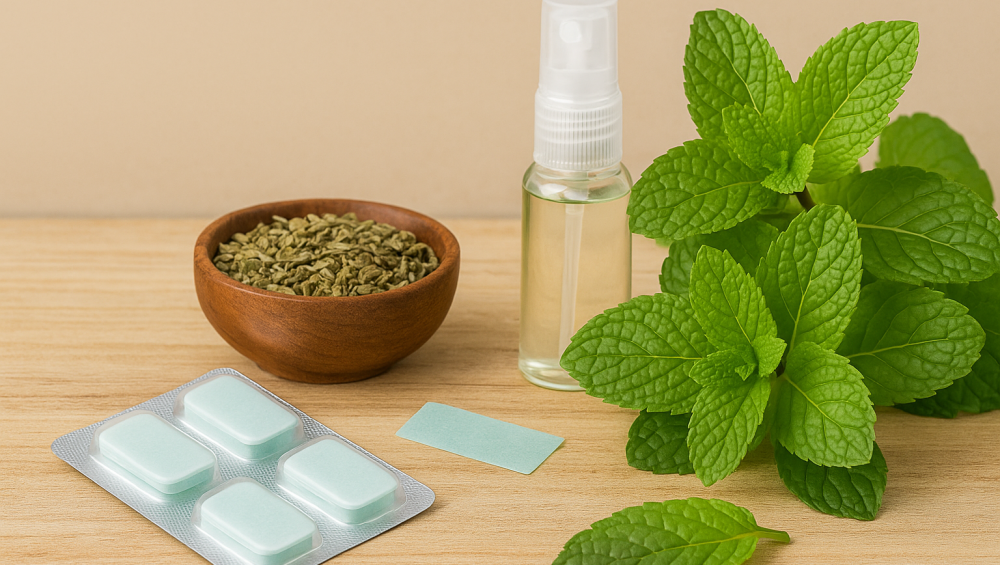
Mint mouth freshener with mint leaves, strips, spray bottle, and herbal seeds on a wooden surface

Mint Mouth Freshener: Benefits, Uses & Natural Fresh Options

What Is a Mint Mouth Freshener

A mint mouth freshener is a quick and natural way to fight bad breath, cleanse the palate, and stay confident throughout the day. The cooling effect of mint comes from menthol, a compound that activates freshness instantly in the mouth. From ancient Ayurvedic remedies using pudina leaves to modern strips and sprays, mint mouth fresheners remain the most trusted solution for oral freshness.

Why Mint Mouth Freshener Works So Well

  • Instant Cooling Effect – Menthol stimulates cold receptors and creates a lasting fresh feeling
  • Odor Neutralization – Mint reduces volatile sulfur compounds, which are the main cause of bad breath
  • Mild Antibacterial Action – Peppermint oil naturally helps reduce odor-causing bacteria in the mouth
  • Digestive Benefits – Mint calms the stomach and is often consumed after heavy meals in Indian tradition

Popular Types of Mint Mouth Fresheners

  • Mint Strips – Dissolve on the tongue within seconds and release intense mint flavor
  • Mint Chewing Gums – Sugar-free gums with xylitol that freshen breath while improving saliva flow
  • Mint Sprays – Pocket-size sprays with peppermint oil for quick and discreet freshness
  • Mint Lozenges – Slow-dissolving candies that provide longer-lasting breath protection
  • Traditional Herbal Mixes – Fennel seeds, ajwain, and dried mint, commonly served in Indian households after meals

Health Benefits of Mint Mouth Freshener

  • Helps maintain oral hygiene by reducing bad breath naturally
  • Prevents dry mouth by stimulating saliva production
  • Provides a sugar-free substitute to candies and sweets
  • Acts as a natural stress reliever with its cooling aroma
  • Supports better digestion when taken after meals

Ingredients You Should Look For

  • Natural Extracts – Peppermint, spearmint, menthol
  • Sweeteners – Xylitol and sorbitol (protect teeth from cavities)
  • Avoid Excess Sugar – Artificial sweeteners and coloring agents should be minimized for better oral health

When to Use a Mint Mouth Freshener

  • After consuming onion, garlic, or spicy food
  • Before important meetings, dates, or interviews
  • While traveling to prevent stale breath and dryness
  • After coffee, tea, or smoking to balance strong aftertastes

Natural vs Artificial Mint Mouth Fresheners

Natural options made with real mint oils and dried herbs are safe for long-term use, offering gentle and authentic freshness. Artificial varieties provide a stronger blast but often contain synthetic flavorings, added sugar, and chemical additives. For healthier results, natural mint mouth fresheners are the smarter choice.

New Trends in Mint Mouth Fresheners

  • Eco-Friendly Packaging – Recyclable packs and biodegradable strips
  • Ayurvedic Blends – Mint combined with tulsi, clove, or cardamom for extra health benefits
  • Sugar-Free Variants – Popular among health-conscious and keto-friendly consumers
  • Subscription Kits – Monthly deliveries of mint strips or sprays for everyday use

Mountain Breeze breath freshener strips with mint and ice for fresh breath anytime, anywhere

Breath Freshener: Habits, Remedies, and Products for Fresh Breath

Why a Breath Freshener Matters

Fresh breath can make every interaction smoother, whether it is in the workplace, at social events, or even at home. Bad breath can stem from food choices, oral hygiene habits, or health conditions, which is why choosing the right breath freshener and maintaining healthy routines is essential for feeling confident throughout the day.

Common Causes of Bad Breath

Understanding the root causes of bad breath helps in choosing the most effective breath freshener:

  • Food and Beverages – Garlic, onions, coffee, and alcohol can leave long-lasting odors in the mouth and bloodstream.
  • Bacterial Build-Up – Food debris and plaque create an environment where odor-causing bacteria thrive.
  • Dry Mouth – Reduced saliva flow, often caused by dehydration or medication, allows bacteria to multiply.
  • Tonsil Stones – Small white or yellow deposits in the tonsils can produce strong odors.
  • Medical Conditions – GERD, diabetes, sinus infections, and liver disease can all contribute to chronic halitosis.

Everyday Habits That Work Better Than Any Breath Freshener

The most effective way to avoid bad breath is through consistent oral care. These daily habits play a crucial role:

  • Brushing Twice Daily – Clean not just the teeth but also the tongue, where bacteria accumulate.
  • Flossing Once a Day – Removes hidden food particles that brushing misses.
  • Tongue Cleaning – A tongue scraper can eliminate sulfur compounds more effectively than a toothbrush.
  • Drinking Water – Staying hydrated keeps saliva flowing and reduces dryness.
  • Routine Dental Visits – Professional cleaning helps control plaque and prevent long-term odor issues.

Quick Breath Freshener Options That Work Instantly

Sometimes you need a fast fix. These options provide reliable freshness on the go:

  • Sugar-Free Gum – Chewing gum stimulates saliva, which naturally washes away odor-causing particles.
  • Breath Mints and Strips – Compact and quick, perfect after meals or before meetings.
  • Mouthwash
    • Cosmetic mouthwash masks odor temporarily.
    • Therapeutic mouthwash targets bacteria, plaque, and gum issues for longer freshness.
  • Natural Remedies – Herbs and spices like fennel seeds, cloves, and cardamom are traditional and effective breath fresheners.

Comparing Different Types of Breath Fresheners

Each option offers unique benefits depending on your lifestyle:

Type of Breath FreshenerBest Use CaseEffect DurationKey Benefit
Sugar-Free GumWork, travelMediumStimulates saliva flow
Breath Strips or MintsAfter mealsShortInstant and discreet
MouthwashMorning or eveningLongFights bacteria and plaque
Natural Herbs & SeedsDaily useMediumSafe, natural, chemical-free
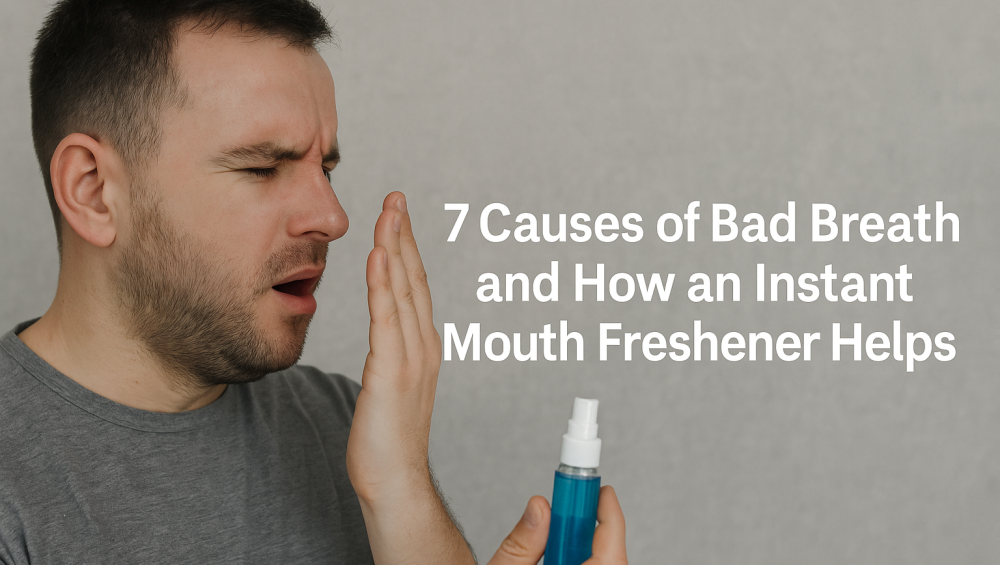
Man using instant mouth freshener spray for bad breath

7 Causes of Bad Breath and How an Instant Mouth Freshener Helps

Bad breath, or halitosis, is a common problem that can affect confidence, relationships, and work interactions. While persistent odour often points to deeper oral or health issues, using an instant mouth freshener can give quick relief in public situations while you work on the root cause.

1. Poor Oral Hygiene and Quick Breath Freshener Use

Neglecting brushing and flossing allows food particles to feed bacteria, producing unpleasant volatile sulfur compounds.

Solution:

  • Brush at least twice a day with fluoride toothpaste
  • Floss or use interdental brushes daily
  • Rinse with an antimicrobial mouthwash

How a quick breath freshener helps: Keeps your breath neutral between brushing sessions when you can’t access your toothbrush.

2. Tongue Coating and Breath Strips for Odour Control

A coating on the tongue traps bacteria, food debris, and dead cells, contributing to bad breath.

Solution:

  • Clean your tongue daily with a scraper or toothbrush
  • Stay hydrated to reduce buildup

How breath strips help: Provide fast freshness during meetings or travel until you can clean your tongue properly.

3. Dry Mouth and Portable Mouth Spray Solutions

Saliva washes away food particles and bacteria. When saliva flow decreases due to dehydration, medications, or mouth breathing, odour intensifies.

Solution:

  • Drink water throughout the day
  • Chew sugar-free gum to stimulate saliva
  • Avoid alcohol-based mouthwashes

How a portable mouth spray helps: Offers quick odour relief when hydration isn’t immediately possible.

4. Strong-Odour Foods, Drinks, and On-the-Go Fresheners

Garlic, onions, coffee, and alcohol produce odour compounds that linger in your breath long after eating.

Solution:

  • Rinse or brush after consuming strong foods
  • Eat raw fruits and vegetables to naturally cleanse your mouth

How an on-the-go freshener helps: Quickly masks lingering food odours in social or professional settings.

5. Gum Disease, Cavities, and Temporary Fresh Breath Options

Gum disease and tooth decay create spaces for bacteria to multiply, causing chronic odour.

Solution:

  • Visit your dentist for professional cleaning and treatment
  • Maintain proper oral hygiene daily

How a temporary fresh breath option helps: Controls odour for a short time while you get professional dental care.

6. Medical Conditions and Breath Care Aids

Sinus infections, GERD, uncontrolled diabetes, and some systemic diseases can cause distinctive breath odours.

Solution:

  • Consult a doctor if bad breath persists despite proper oral care
  • Treat the underlying medical condition

How breath care aids help: Manage odour during treatment or flare-ups.

7. Tobacco, Nicotine, and Breath Freshening Alternatives

Smoking and chewing tobacco cause lasting bad breath, staining, and gum irritation.

Solution:

  • Quit tobacco products entirely
  • Follow a strict oral hygiene routine

How breath freshening alternatives help: Mask odour temporarily but cannot reverse tobacco’s effects.

Daily Routine for Fresh Breath

  • Brush twice daily and floss once
  • Clean your tongue each morning
  • Stay hydrated throughout the day
  • Limit odour-heavy foods before important events
  • Carry a discreet instant mouth freshener in your pocket, purse, or desk for fast freshness anytime